
Featured application
Aquaculture and remote fish farms
Sites that already work offshore — powered today by fuel that arrives on a boat.
The customer problem
The power arrives by boat — and so does the risk.
Frequently off-grid or weak-grid, often diesel-dependent, and relevant across South America, Asia, Norway and other coastal markets.
A modern farm is not a quiet set of nets. Feed barges run blowers, augers and feed control through the night. Lighting manages the growth cycle. Aeration and oxygenation protect stock when the water warms or the current drops. Sensors, cameras, net cleaning and on-site handling all draw power, and every one of them is expected to work at three in the morning in bad weather.
Where there is no grid connection — or one too weak to carry the load — that power comes from generators, and the fuel comes by boat. The fuel price is only part of the cost. The rest is logistics: chartering the delivery, transferring fuel at sea, storing it on site, servicing the sets, and absorbing the days when weather stops the boat sailing at all. A farm sited further out pays for that distance in every one of those lines, not only in litres.
- Feed barges — blowers, augers and feed control, the largest continuous draw on most sites.
- Lighting, aeration and oxygenation — the systems that protect stock when conditions turn, and the ones that cannot be switched off to save fuel.
- Sensors, cameras and net cleaning — a modest but unbroken load that keeps the site monitored.
- On-site handling and processing — short, heavy peaks whenever it runs, which is what usually sizes the generator.
The two diesel rows are a total cost of energy — fuel, delivery, storage, generator maintenance and downtime included — as compiled in the NoviOcean Extended Presentation (slide 23); the fish-farm figure is distance-dependent and rises the further a site sits from shore. The NoviOcean row measures something different: LCOE figures refer to unit-level generation cost (excluding site-specific infrastructure such as grid connection, export cabling or local permitting). The three bars therefore indicate scale, not a like-for-like comparison — a delivered project would add site-specific costs that the diesel figures already contain. The published sector figures are quoted in cents per kWh without a stated currency; the NoviOcean figure is in euro cents.
Try it
What would a unit do for your site?
Most farms need one or two units, not an array. Set the size and the site’s annual demand to see the share covered and the diesel it displaces.
Illustrative scenario based on representative assumptions. Actual performance depends on location, wave climate, wind, solar irradiation, configuration, load profile and local energy costs. Contact NoviOcean for a site-specific assessment.
The assumptions behind these numbers
| Assumption | Value | Source |
|---|---|---|
| Rated power per unit | 850 kW — 300 wave / 350 wind / 200 solar | Deck slide 6; identical on Technology, Medi Wave 850H, Validation and Simulator modeled |
| Annual production per unit | ~2,500 MWh per year | Deck slide 22 — representative modeled production, not guaranteed for your site modeled |
| Diesel displaced | 400 litres per MWh delivered | Derived from ~1,000,000 litres per 2,500 MWh, deck slide 22 modeled |
| Emissions avoided | ~1 tonne CO₂e per MWh delivered | Derived from ~2,500 t per 2,500 MWh, deck slide 22 modeled |
| NoviOcean energy cost | ~70 €/MWh (~7 c€/kWh) | Conservative end of the Stage A range, 4–8 c€/kWh, deck slide 26 projected |
| Capacity factor | not used | V2 publishes no Medi Wave capacity factor. Annual energy comes straight from the published figure above, never from a capacity factor. estimate |
| Reference offshore energy cost | 15–30 c€/kWh total cost of energy, default 22 | Deck slide 23, offshore fish farms, distance-dependent partner |
Demand and price above are illustrative defaults, not your site’s figures, and no local wave, wind, solar or demand data has been used. Output is representative modeled production, not a guarantee.
What NoviOcean brings
Generation beside the pens, instead of fuel across the water.
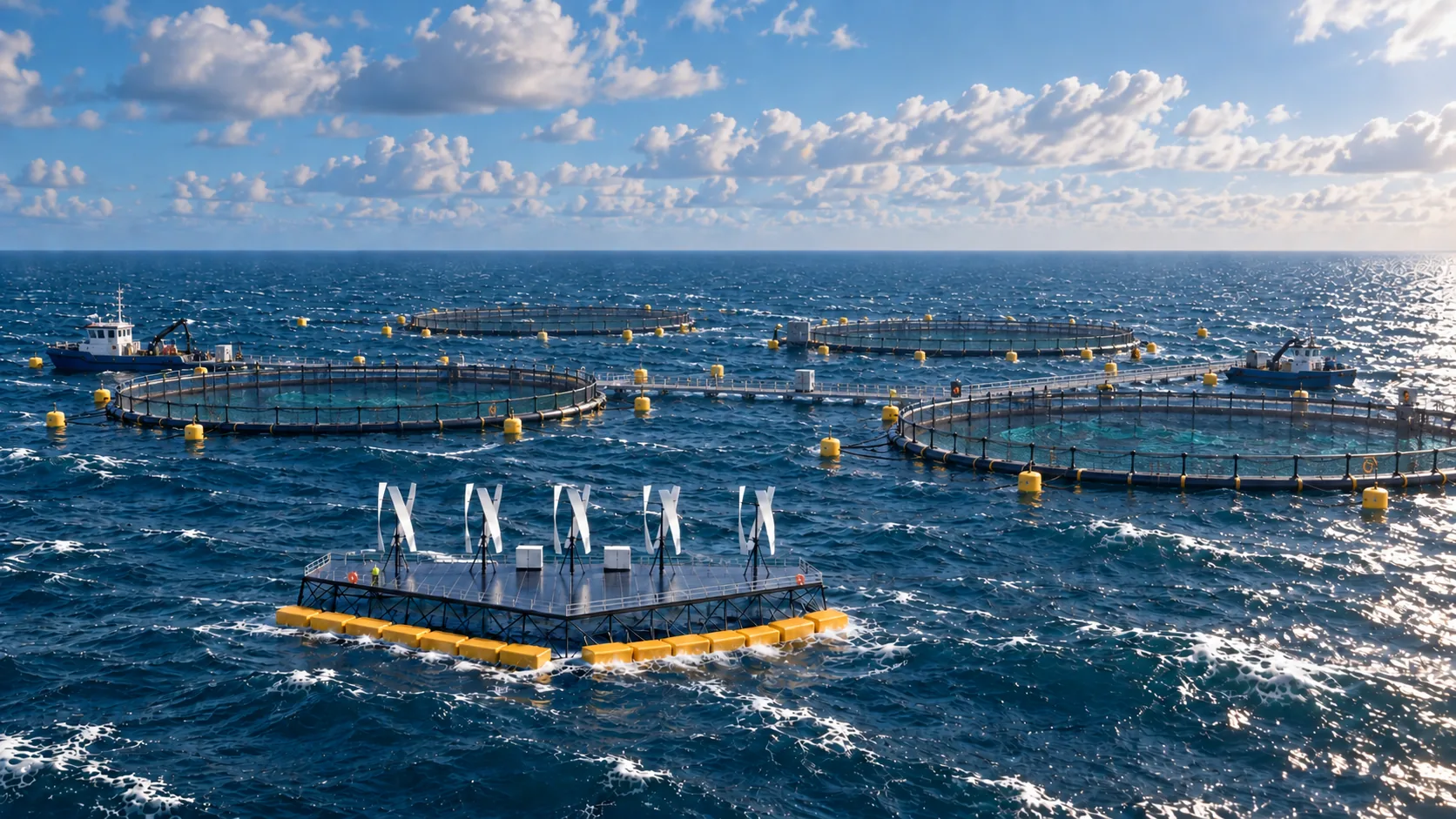
A fish farm is already a marine operation. It holds moorings, it runs service vessels, it has crews who work on the water in weather, and it maintains equipment that lives offshore. That is the same operational skill set a floating power platform needs — which makes an aquaculture operator a genuinely different proposition from a land-based customer, who would have to take on marine operations for the first time in order to buy this kind of energy at all.
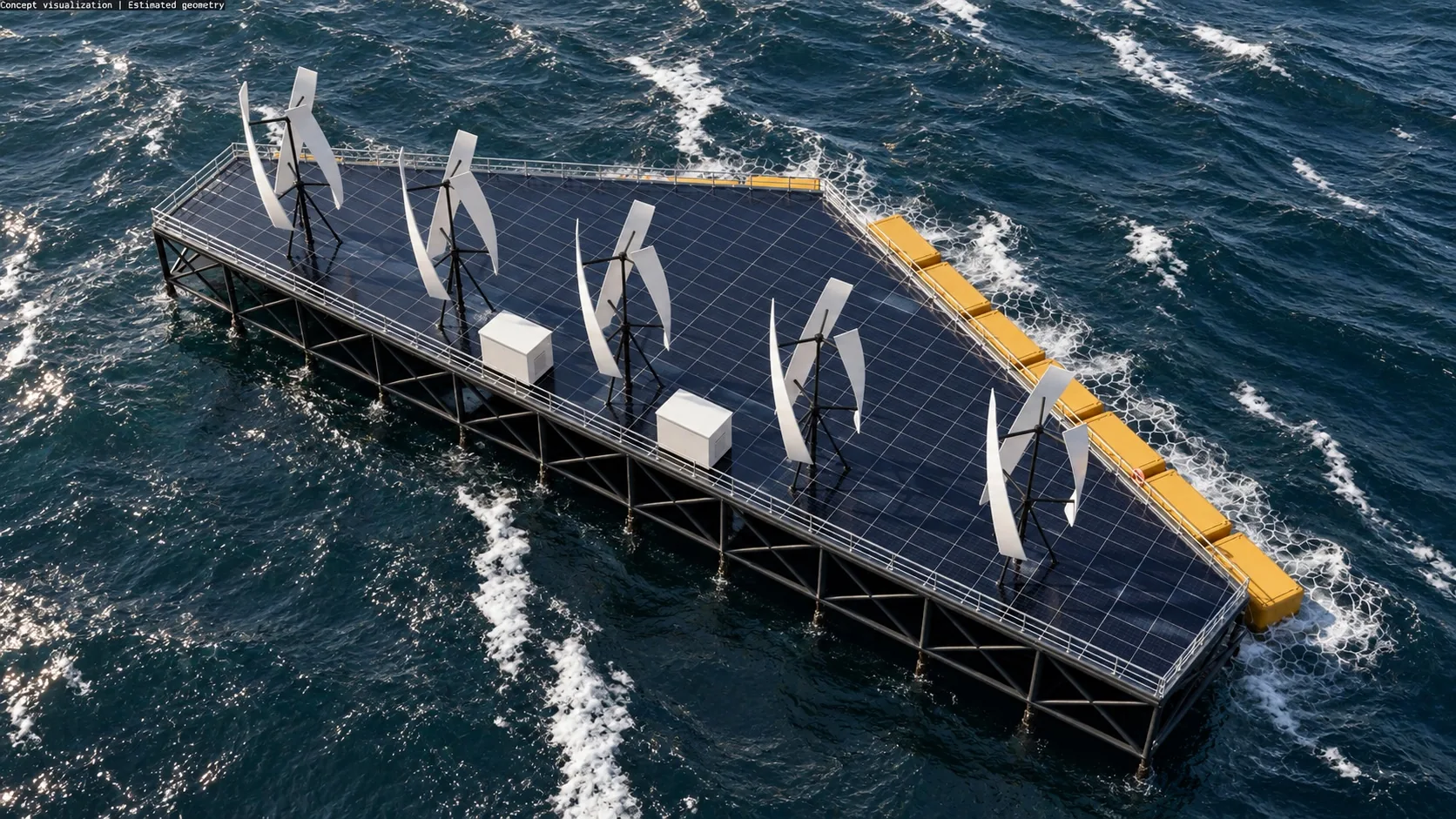
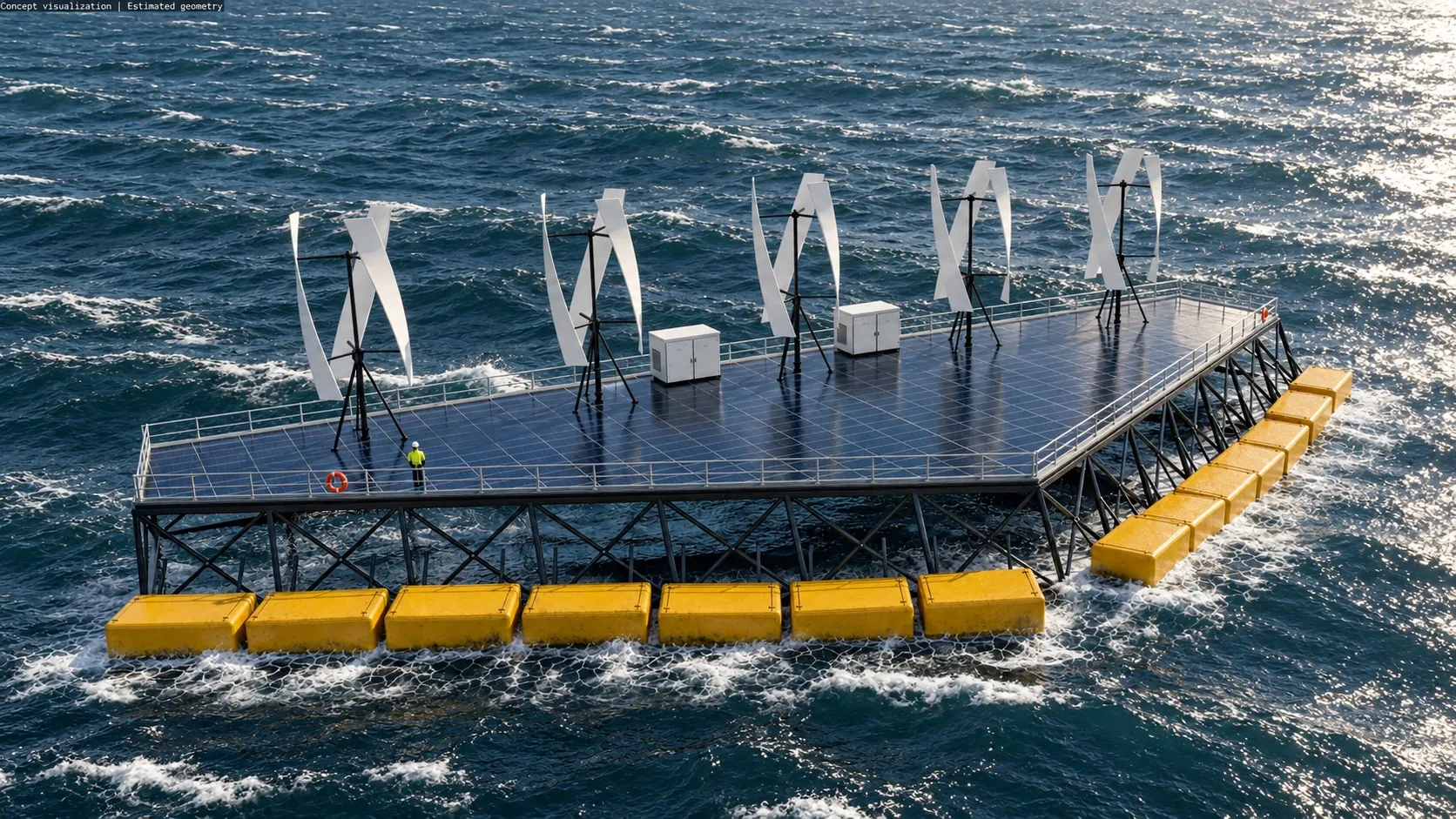
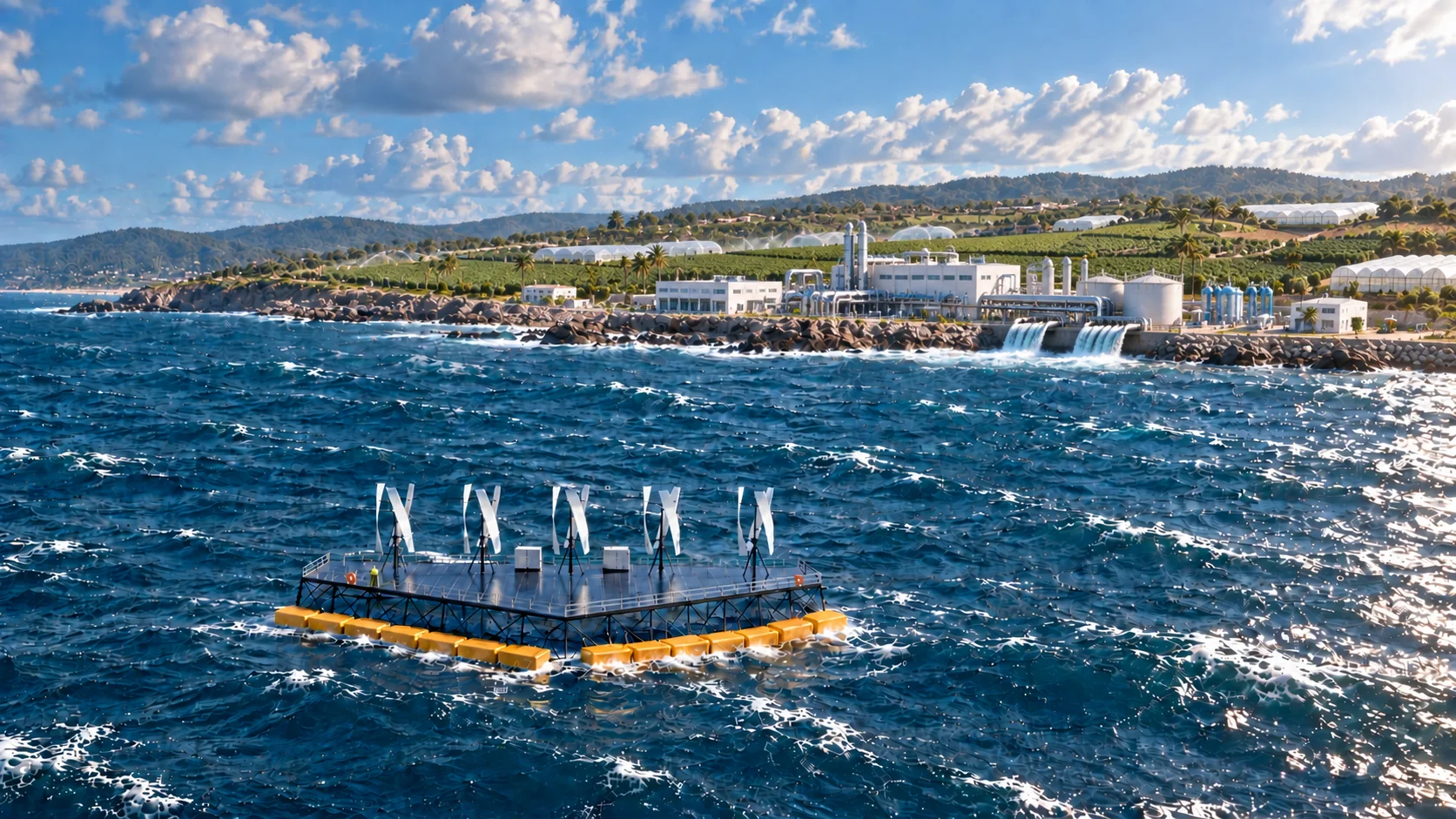
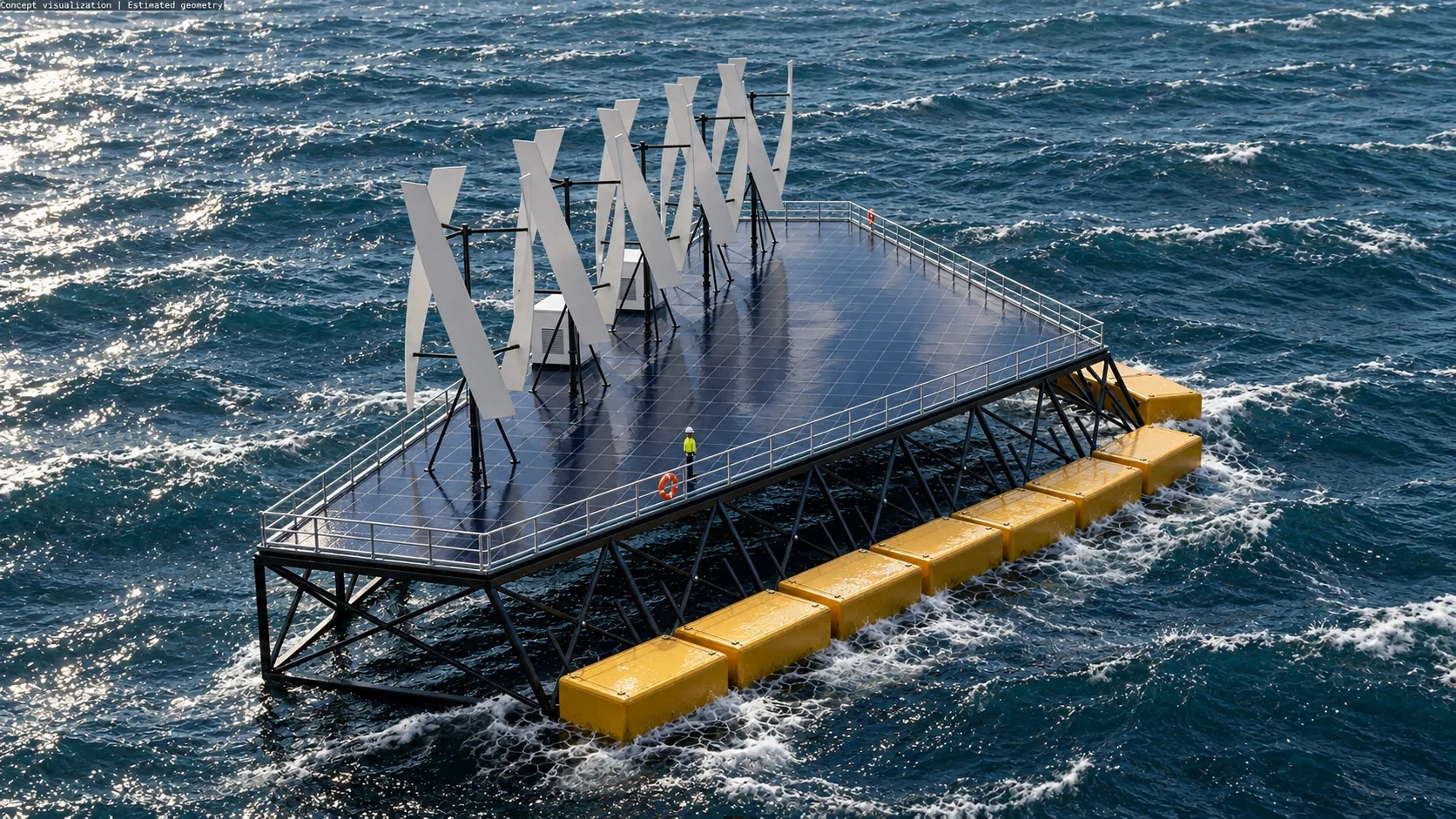
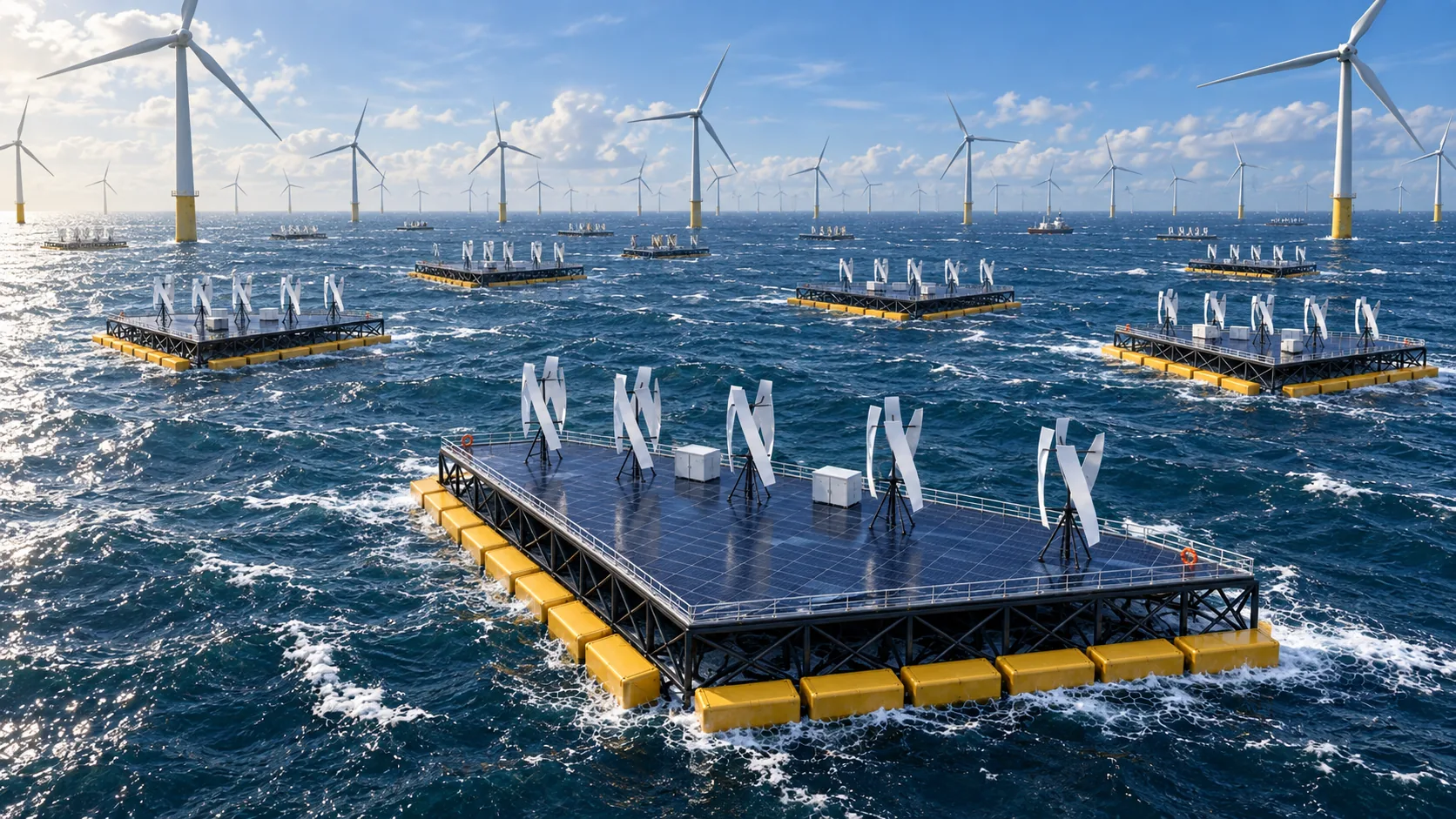
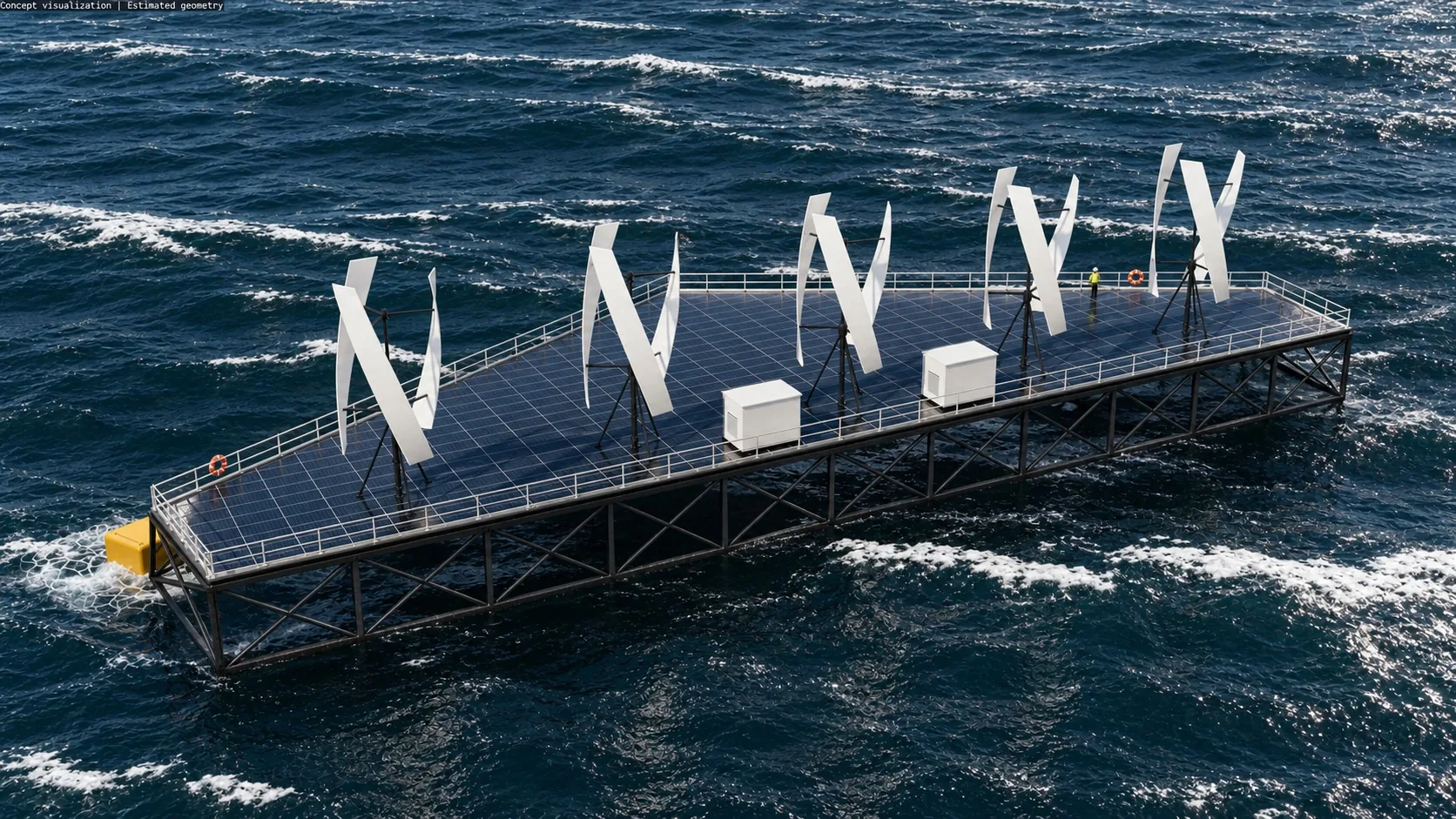
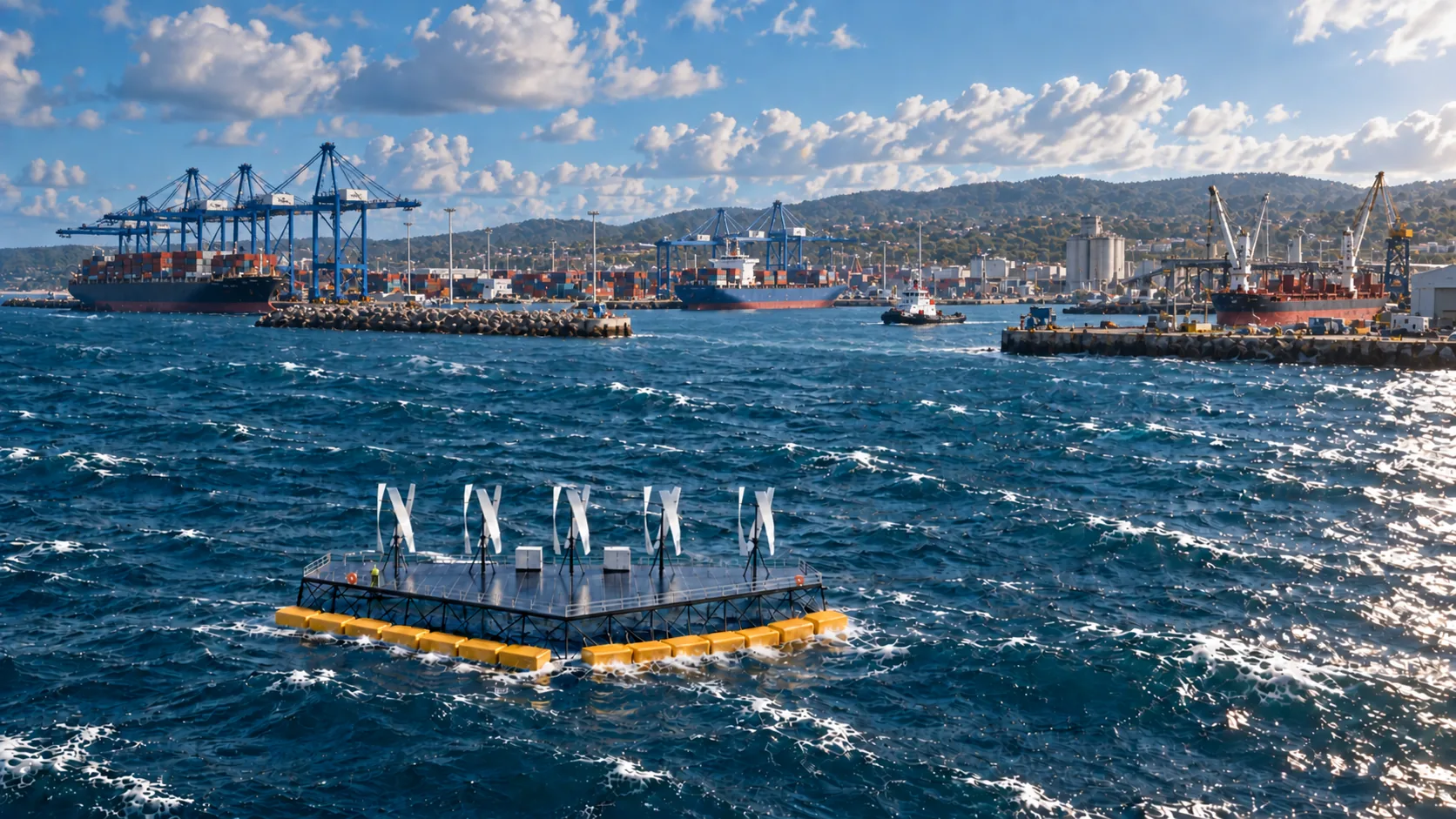
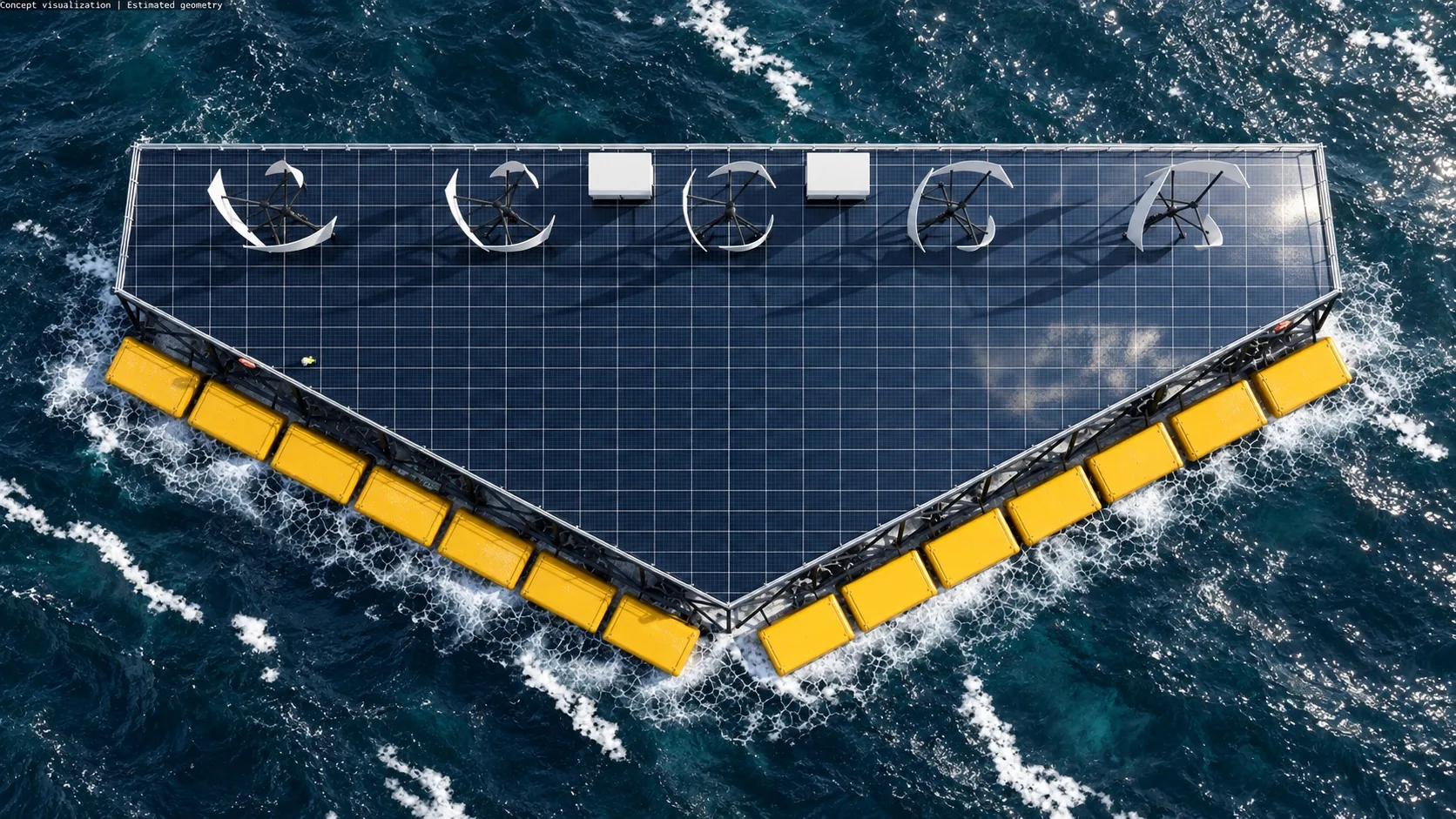
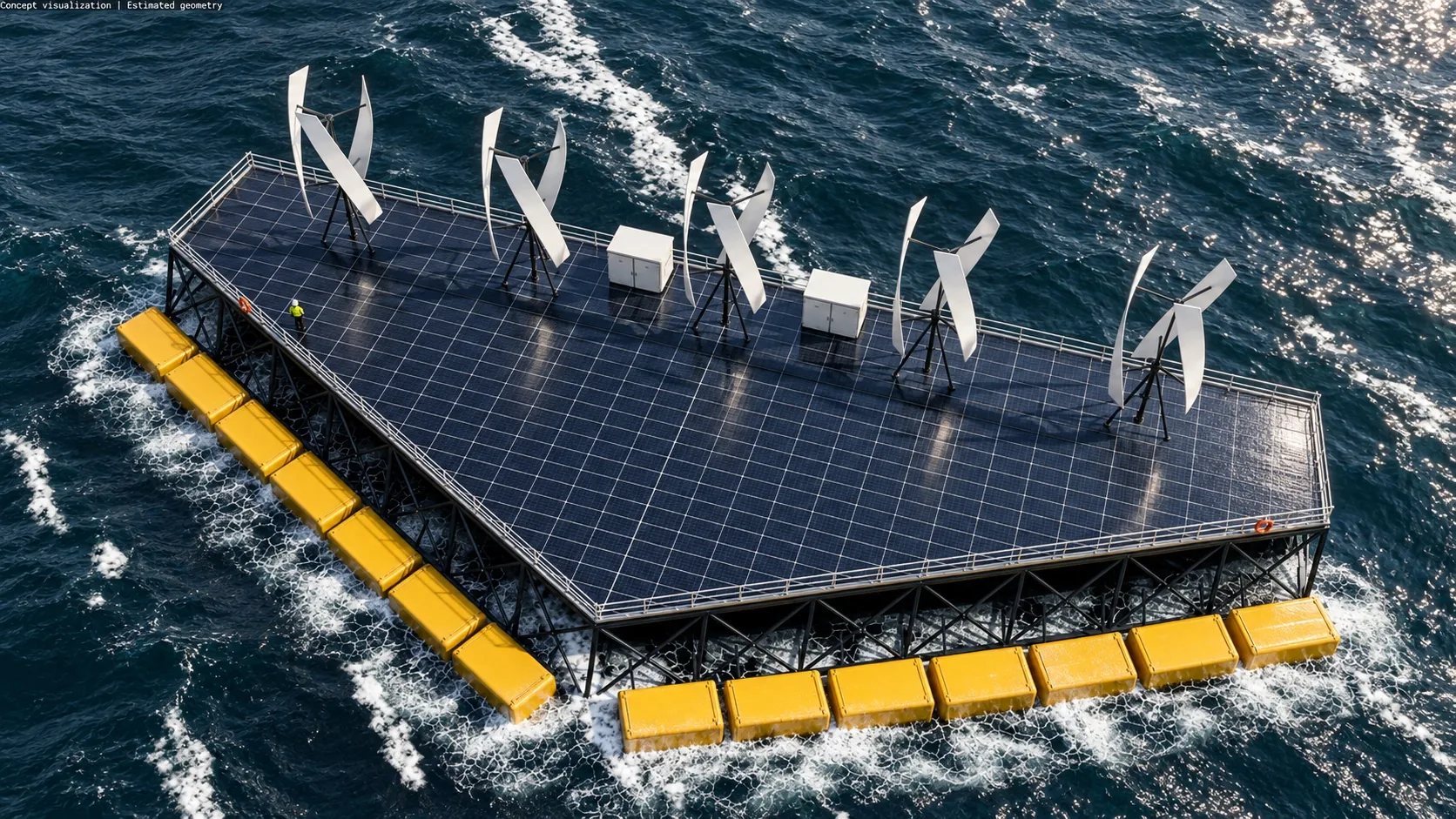
The platform is moored near the pens and generates from wave, wind and solar on one structure, one mooring and one cable. Each unit is rated at 850 kW — 300 kW wave, 350 kW wind and 200 kW solar. management estimate Because the three sources rarely peak together, output is spread across more hours of the day and the year than a single-source plant of the same rating, which is closer to the shape of a farm’s continuous load.
Every kilowatt-hour generated on site is one a generator does not have to produce, and a litre that does not have to be bought, chartered, transferred at sea and stored. The further a site sits from shore, the more the comparison favours generating power where it is used: distance adds cost to every fuel delivery, while the wave, wind and sunlight the platform draws on are already there.
1,000,000 litres
Diesel displaced, per unit, per year
Fuel that no longer has to be bought, chartered, transferred at sea and stored on site.
modeled~2,500 tonnes
CO₂e avoided annually, per unit
Emissions avoided by the diesel generation the unit replaces.
modeledBoth figures describe one unit fully displacing diesel generation, against a modelled annual production of roughly 2,500 MWh. modeled A farm whose load is smaller than a unit’s output displaces proportionally less — the honest version of these numbers is the one calculated against a specific site’s measured load and its actual fuel bill.
Operational fit
Why marine operators are a natural first customer.
Most early customers for offshore energy have to learn marine operations before they can buy it. Aquaculture operators already have them — which shortens the distance between an interesting idea and a project someone can actually run.
- Moorings and consents already exist. A farm site has been surveyed, permitted and anchored. The slowest administrative work of putting anything into the water has been done there once already.
- Vessels and crews are already on site. Service boats, lifting capacity and people trained to work offshore are part of a farm’s normal week rather than a new cost line invented for an energy project.
- The load sits beside the generation. Power is consumed a few hundred metres from where it is produced, so there is no long export route to build and no grid connection to negotiate.
- The alternative is already measured. Operators know precisely what delivered diesel costs them per year, which makes the comparison a short and unusually concrete conversation.
A possible project pathway
How a first aquaculture project could start.
Nothing below is a committed project. It is the sequence NoviOcean would expect to follow with an operator who wants to test the idea properly, in the order that answers the hardest question first.
Step one
Sea-state and site review
A review of the wave, wind and solar resource at the farm itself, set against the site’s measured load and its current fuel bill. Sea state at the specific site is what decides feasibility: a sheltered inshore location carries far less wave energy than an exposed one, and for some farms the honest answer is that the wave contribution would be small.
Step two
One unit, one cluster of pens
A single unit sized against a cluster of pens and the handling and processing equipment that serves them — co-located with the existing moorings and consents wherever that is practical, because reusing permissions the operator already holds is usually the faster route to water.
Step three
Shared units across neighbouring sites
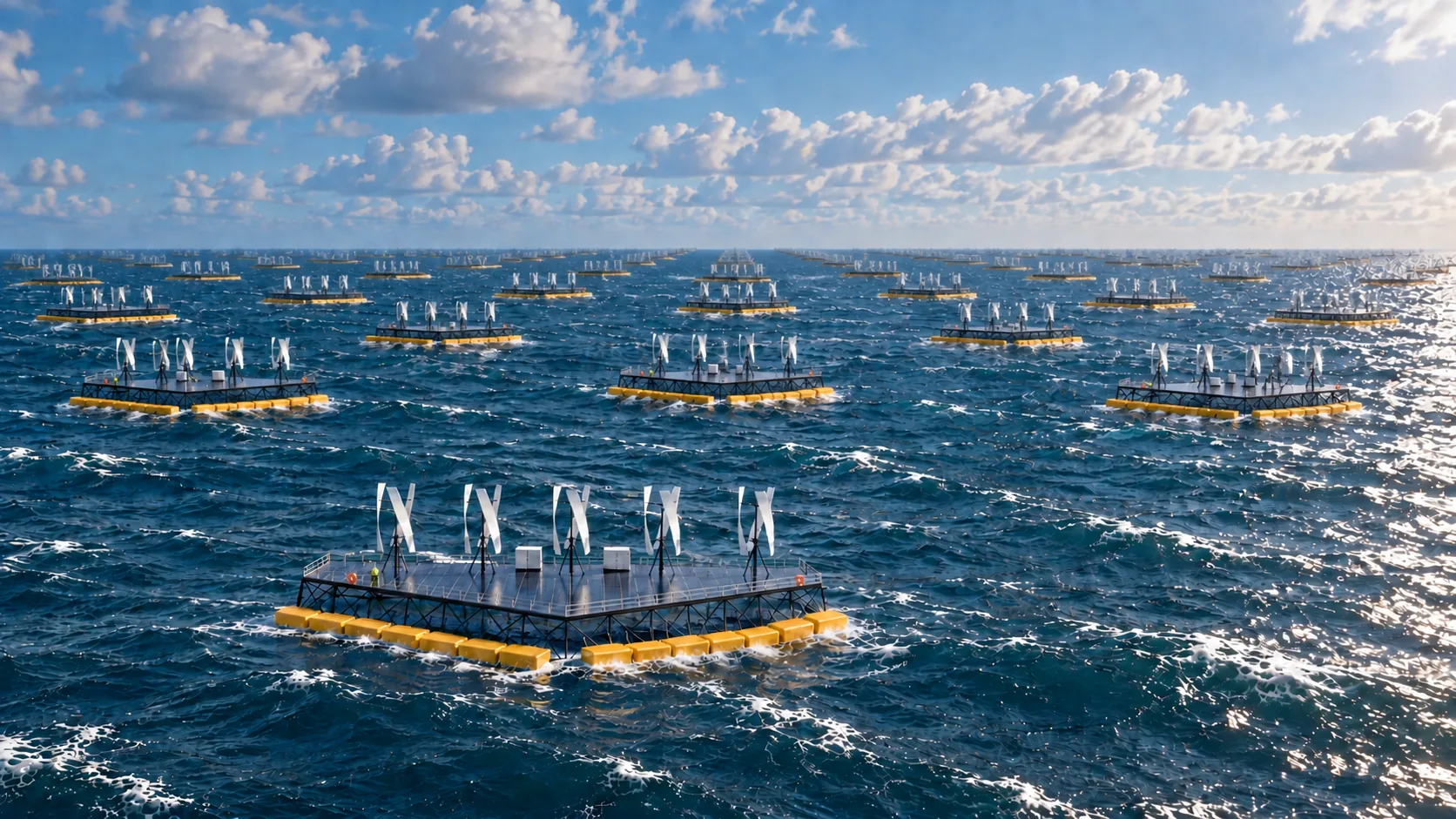
Where neighbouring farms sit close enough and their operators are willing to co-invest, one platform can serve more than one site, spreading the cost of the structure and the mooring across more of the load it supports.
- Co-location with existing moorings and consents is often the practical route to a first unit, and it is the first thing worth checking.
- Sea state at the specific site decides feasibility. There is no general answer for aquaculture as a category — only an answer for a farm.
- Ownership can sit with the farm operator, with a project company, or with a partner that operates the platform and sells the output.
Power made where it is used.
Tell us about the site.
Give us the farm’s location, its measured load and what it currently pays for delivered fuel. We will tell you honestly whether a NoviOcean unit fits it — including when the answer is that it does not.