
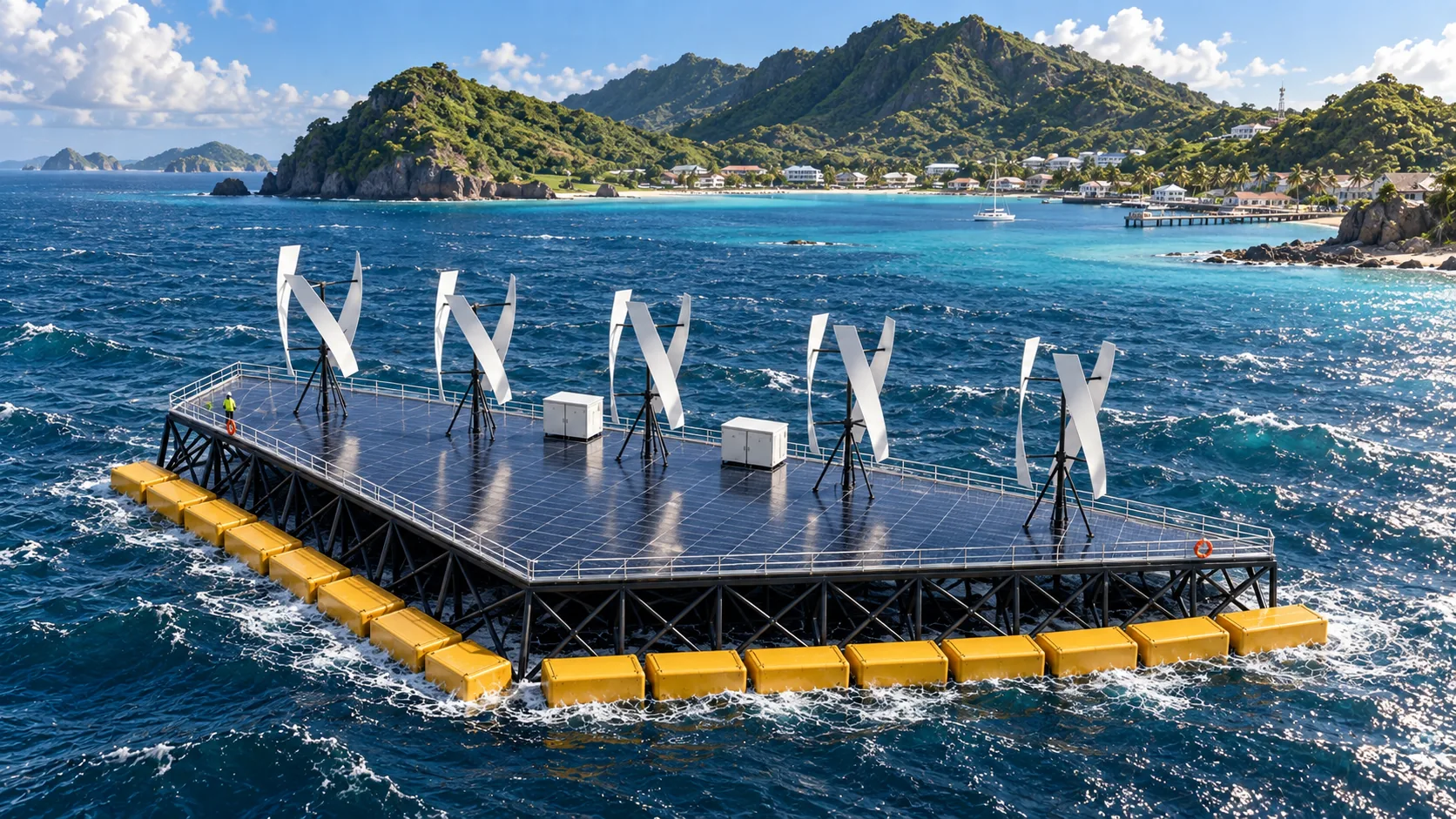
The current product
Medi Wave 850H
Wave, wind and solar on one floating platform — NoviOcean’s current product, pilot and commercialisation pathway.
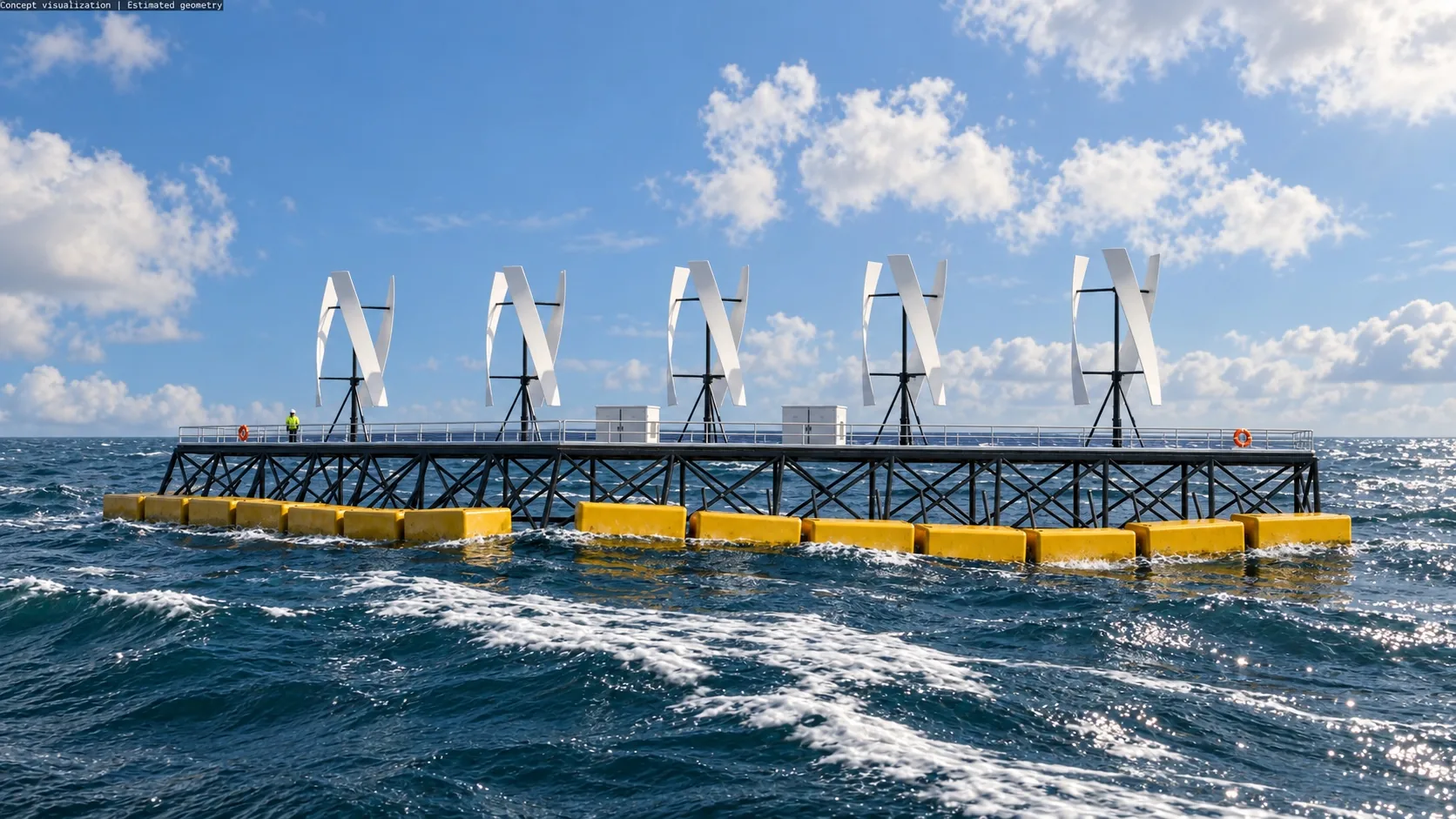
Overview
Built for the seas most coastlines actually have.
Most coastlines never see Atlantic swell. They get medium and small waves for most of the year — the conditions where classic wave power struggles to pay for itself.
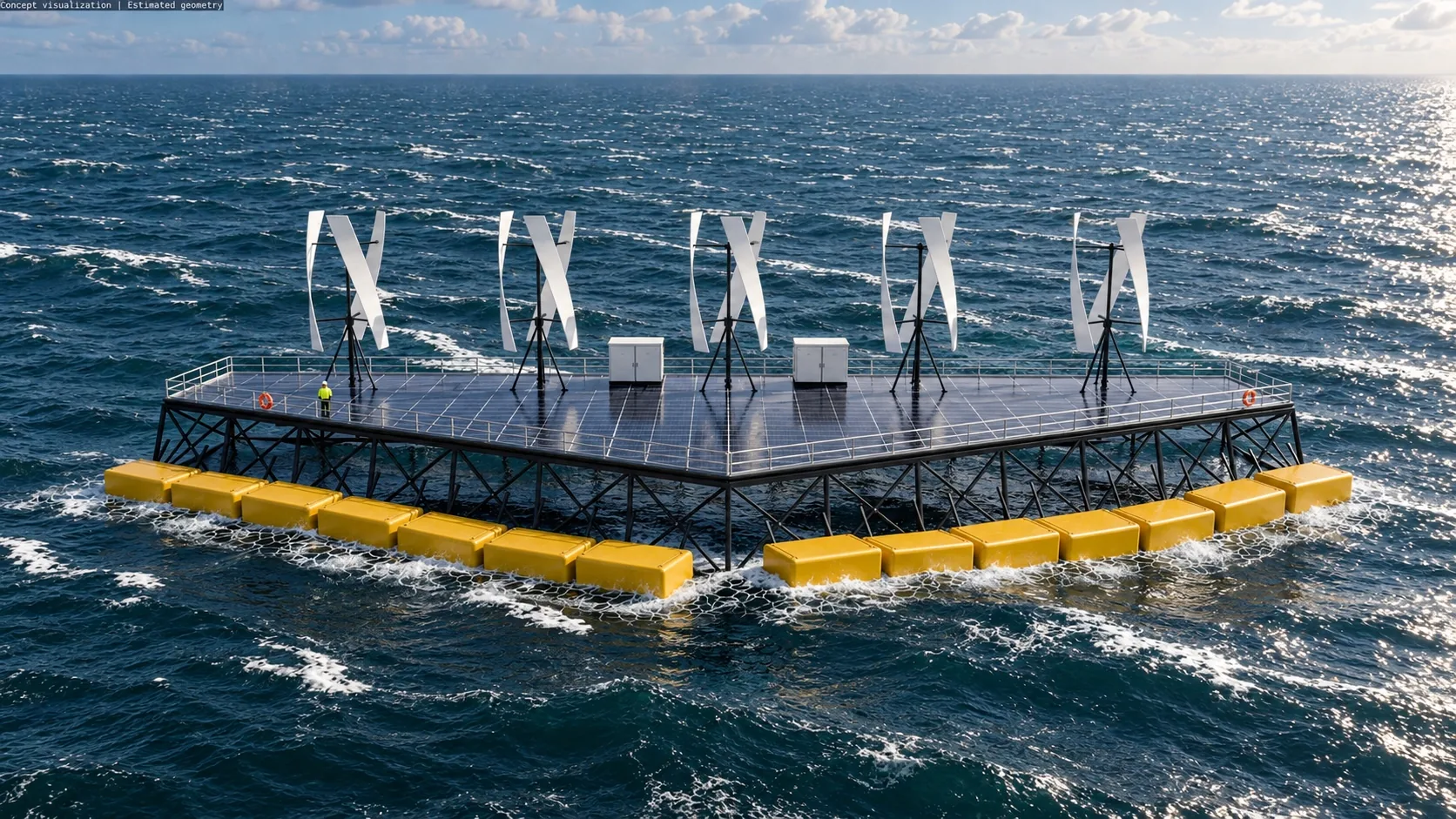
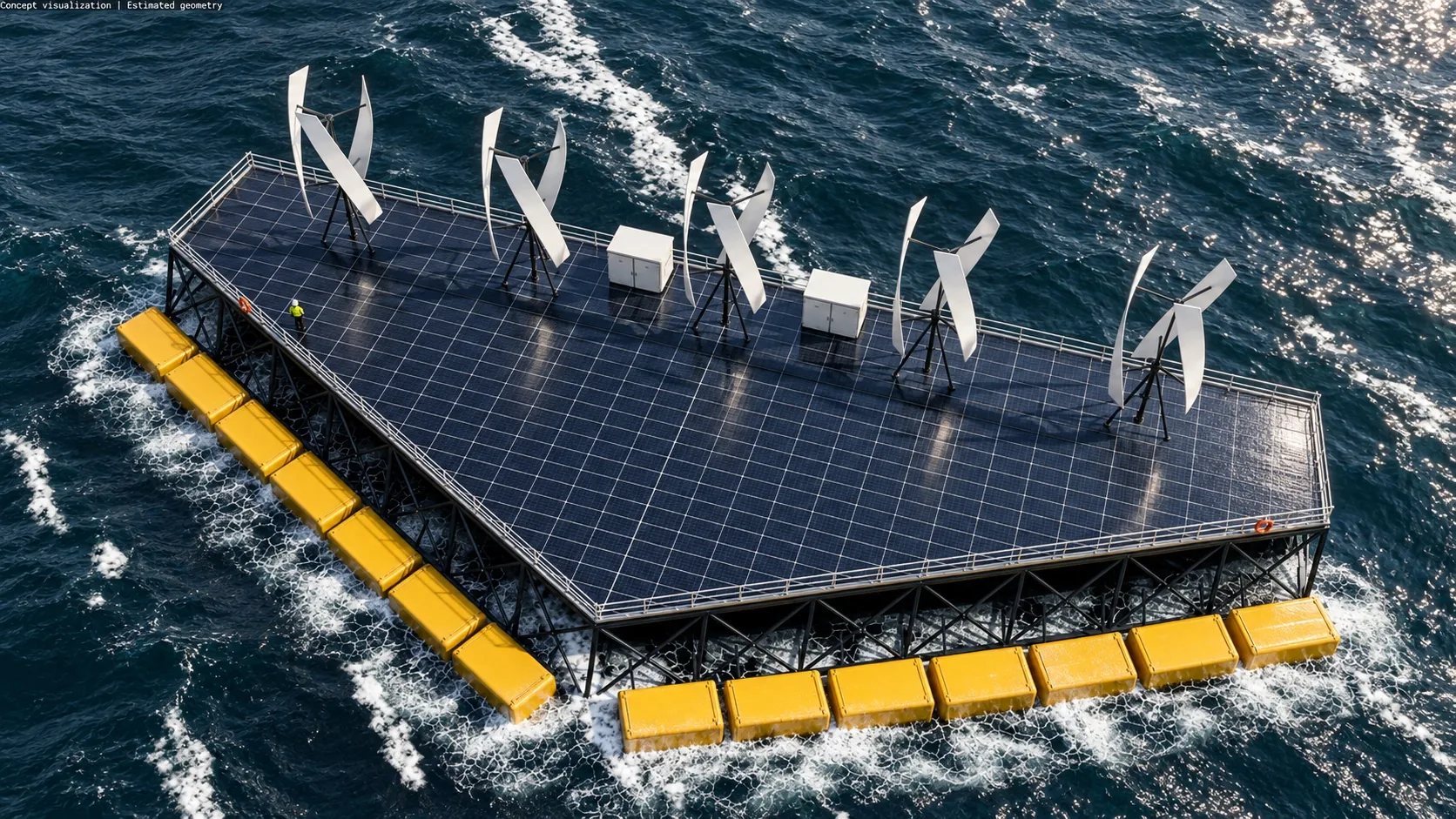
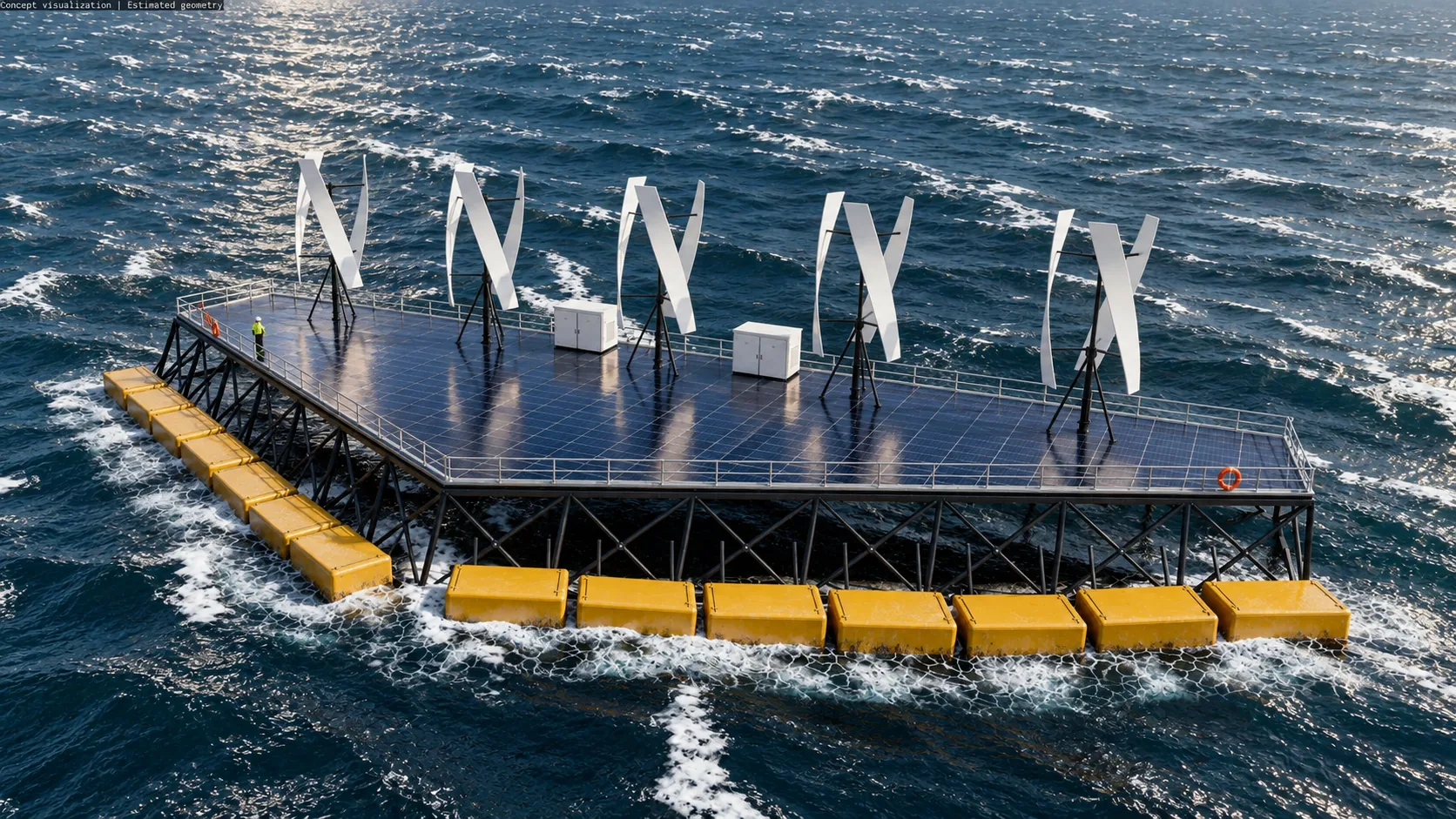
Medi Wave 850H is designed for exactly those conditions, which cover a larger part of the world’s coastal regions — Asia-Pacific and the global east coasts among them. Wave, wind and solar sit on one floating structure, sharing one mooring and one cable to shore.
It is the model NoviOcean is commercialising. The demonstrator in the water in 2026 is Stage 4 of the development journey; the full-scale pilot is the next major phase.
The rated split
Three sources, one structure.
Two of the three sources are established specialist technologies supplied by their own developers. The third is NoviOcean’s own wave system. What is new is putting all three on the same platform, sharing the same mooring and the same cable.
Wave — NoviOcean PTO
Presently TRL 6 and progressing toward TRL 7.
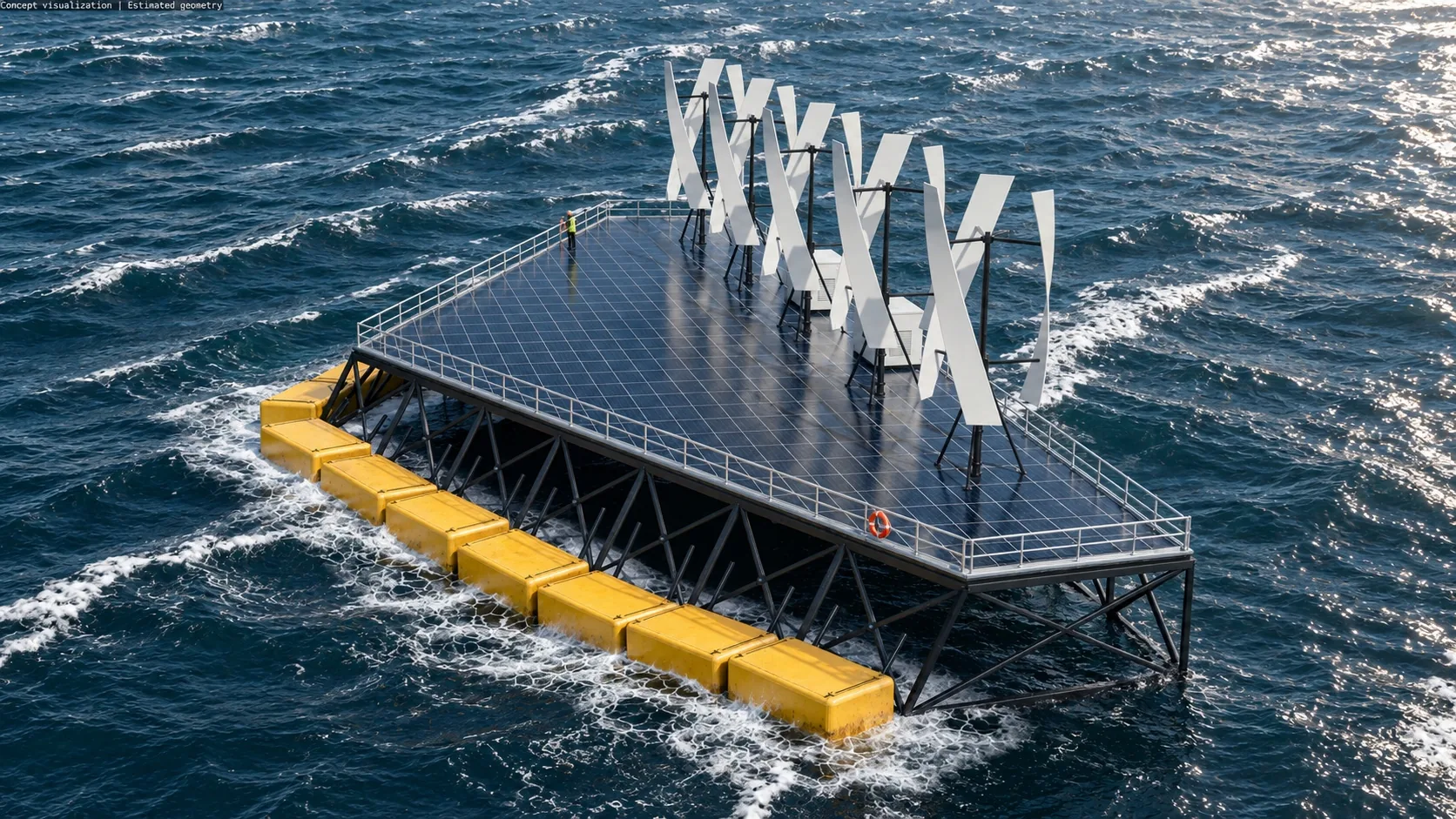
An inverted hydropower plant. Independent side floats drive hydraulic cylinders, pressurising water to power a Pelton turbine — using proven hydropower principles.
Wind — Wind Harvest VAWT
Substantial full-scale development; approximately TRL 7 completed and progressing toward TRL 8 / certification.
Compact vertical-axis turbines standing on the platform itself, in modular units. They are quiet in operation and, unlike conventional rotors, they gain rather than lose from close placement.
Solar — Midsummer CIGS
Commercially established technology; approximately TRL 9.
Lightweight flexible CIGS panels across the deck: low shading sensitivity, strong low-light performance and a design suited to the marine environment.
Total rated power is 850 kW. management estimate The main structure is conventional welded-steel shipyard engineering built with established marine construction methods — the integration is what is new, not the way the steel is built.
NoviOcean is the only ocean energy company using the highly effective, proven, long-lasting Pelton turbine. management estimate
The Pelton wheel has run hydropower plants for well over a century. In Medi Wave the only change is where the pressure comes from: the wave, instead of a dam.
(350 kW + 200 kW) / 850 kW = 65% of rated capacity from established specialist technologies. Rated capacity is the installed nameplate; annual production is modelled and site-dependent. Marine integration and final configuration still require engineering and validation. Source: NoviOcean design basis.
Rated power
850 kW From one floating structure, one mooring and one cable to shore. management estimate See the full specificationSpecification
The unit, in numbers.
These are the design values NoviOcean publishes for the Medi Wave 850H. Each row carries the evidence behind it. Figures that the current approved design basis does not yet settle are not published here at all — they are listed in the note below the table.
| Item | Value | Evidence |
|---|---|---|
| Rated power | 850 kW — wave 300 kW · wind 350 kW · solar 200 kW | management estimate |
| Solar deck | Approximately 1,000–1,300 m² of flexible CIGS panels, project-dependent | management estimate |
| Wind | Five to seven modular 50–75 kW vertical-axis turbines, project-dependent | partner-reported |
| Floats | The full commercial configuration carries fourteen side floats; the 2026 demonstrator runs a reduced configuration | management estimate |
| Design life | 50-year financial lifetime | management estimate |
| Unit size | Initial 850 kW design; planned larger 3 MW and 5 MW units, with 10 MW a possible longer-term development. | development plan |
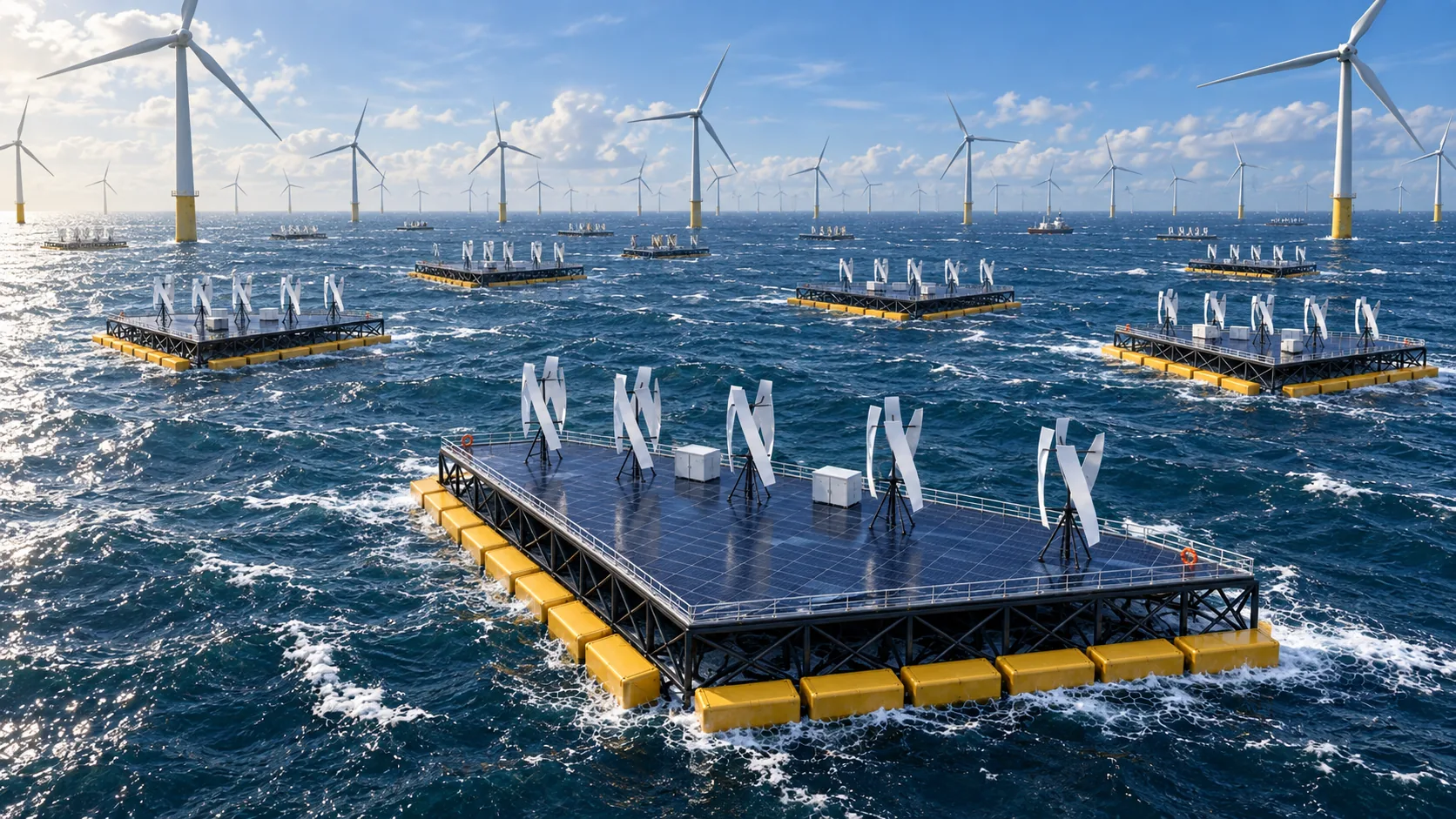
| Deployment scale | From individual units to multi-unit offshore arrays, including projects of 20–50 MW and beyond. | development plan |
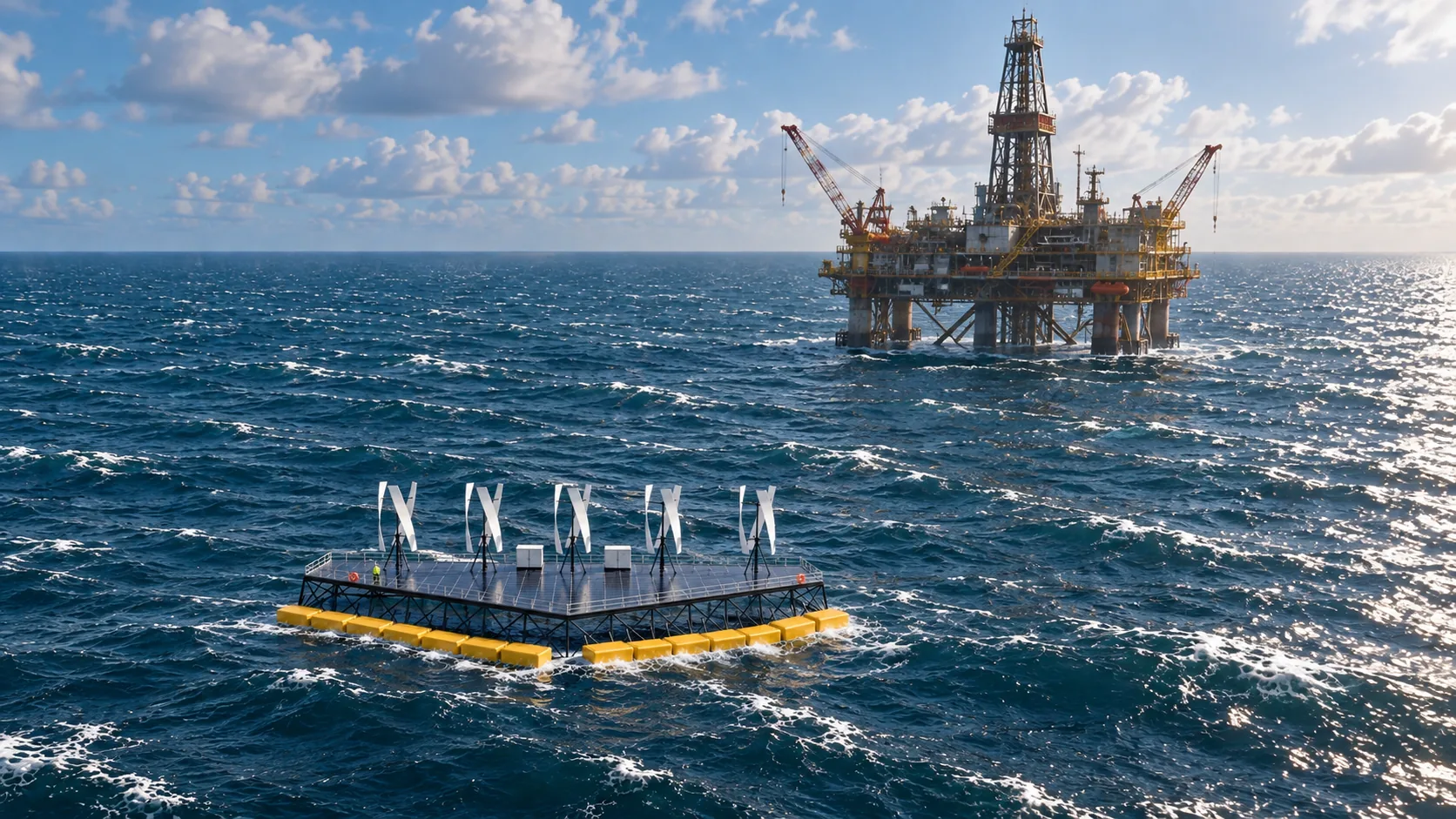
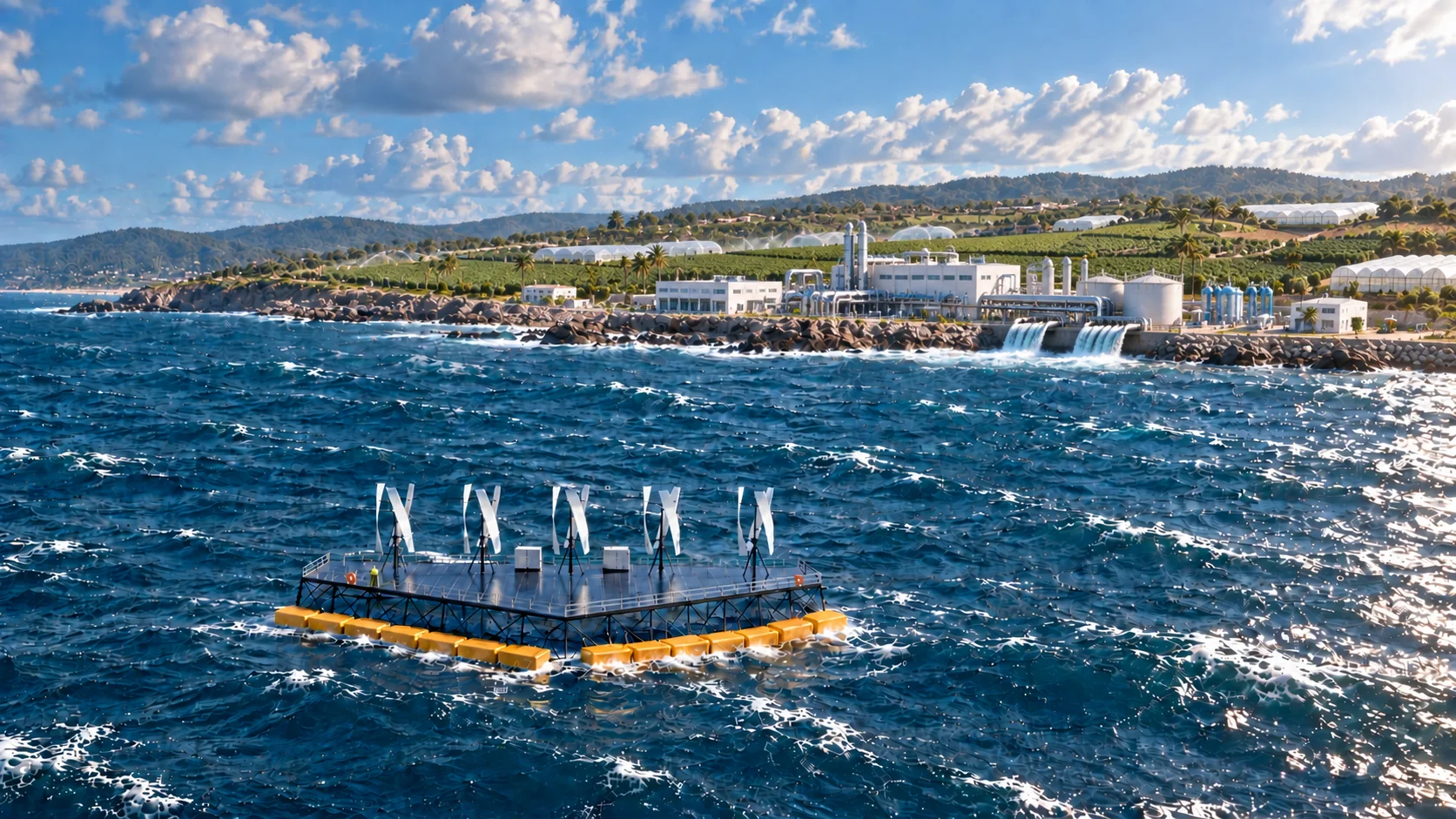
| Options | Containerised desalination and/or battery storage on the platform | management estimate |
| Wave regime | Medium and small waves — a larger part of the world’s coastal regions, for example Asia-Pacific and the global east coasts | management estimate |
| Programme | Stage 4 — NO3 demonstrator, 2026, TRL 6–7 (current) Stage 5 — full-scale pilot, 2027–2028, TRL 7–8 (next) |
projected |
Operation and survivability. Designed for normal operation in 0.5–5 m waves, with survivability engineered for extreme seas with waves up to 30 m and wind speeds up to 80 m/s. NoviOcean design target
On TRL. Technology-readiness levels on this page are screening self-assessments made by NoviOcean and its partners. They are not independent certifications.
On ratings. A rating is nameplate capacity, not production. Annual output is modelled and depends on the site, the wave climate and the final configuration.
On configuration. Float count, turbine count and solar area are project-dependent. Marine integration and final configuration still require engineering and validation.
Not published here. Platform mass, structure geometry and capacity factor are being confirmed against the latest approved design basis and are deliberately not stated on this page. They are shared, with their assumptions, in technical dialogue.
Where it works
Two wave climates, one product line.
Wave energy is usually engineered for the roughest seas on earth, which is why so little of it is deployable. NoviOcean splits the problem in two — and builds the calmer half first.
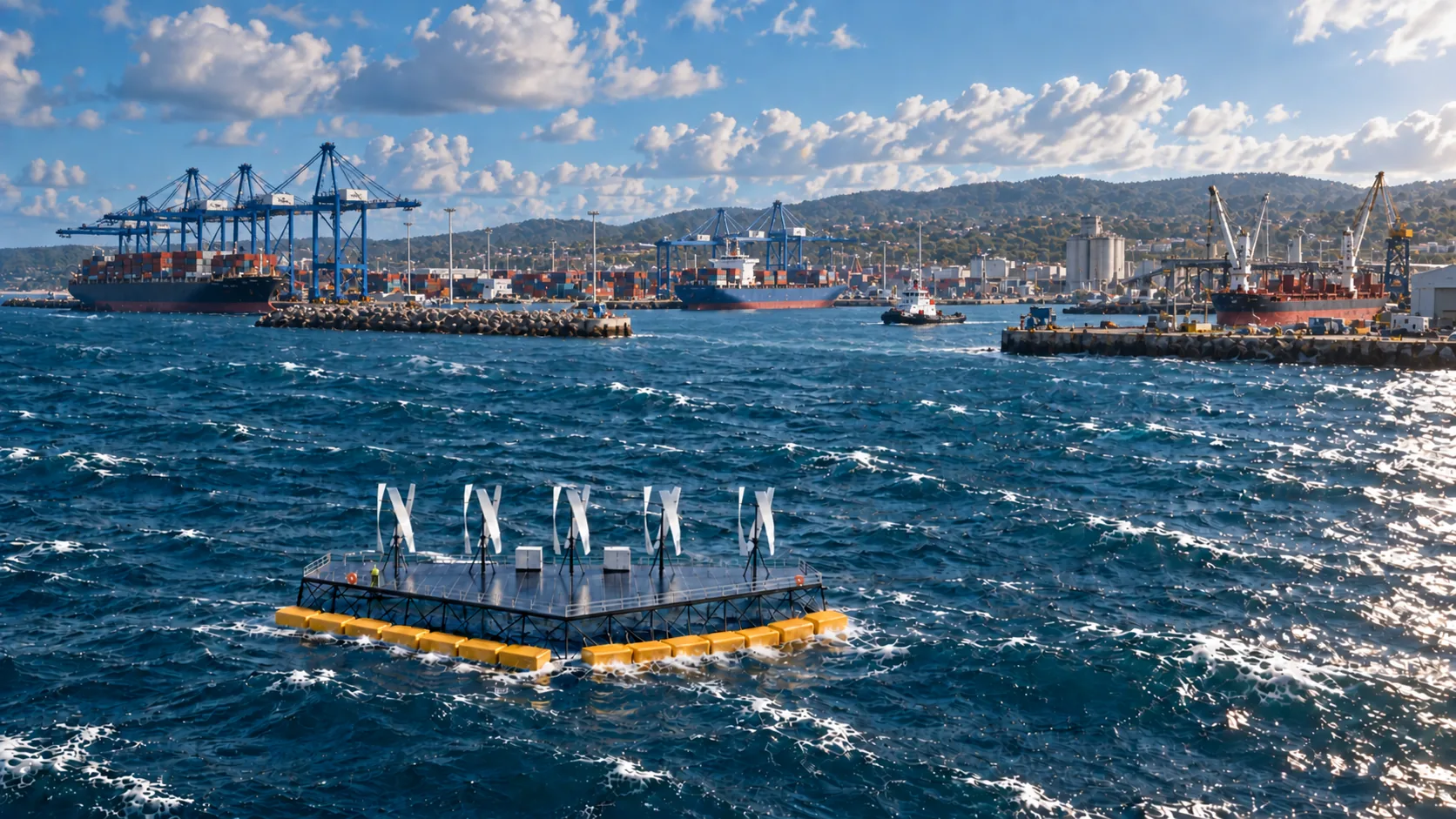
Medi Wave 850H is designed for the medium and small wave conditions that most ports, islands and coastal industries actually sit in. Alta Wave 1000H is a future specialised solution for very high-energy wave regions; it is not a parallel near-term programme.
The wave-height ranges shown represent normal energy-producing operation, not survivability limits. Both systems are designed to withstand extreme waves up to 30 m.
Programme
Where Medi Wave is today.
The NO3 triple-hybrid demonstrator has been deployed at sea and is undergoing testing and validation of our design and simulation models. The next major milestone is the full-scale Medi Wave pilot with a utility partner, advancing toward commercial deployment. projected
Stage 4 — NO3 triple-hybrid demonstrator. Deployed at sea and undergoing testing to validate hydrodynamic behaviour, structural response, mooring performance and simulation models.
Stage 5 — full-scale Medi Wave pilot. First customer pilot with a utility partner: integrated offshore performance validation.
Stage 6 — hybrid ocean energy farms. Commercial arrays and large-scale deployment through shipyard production.
The NO3 demonstrator validates hydrodynamics, structural behaviour, mooring performance and simulation models. The patented wave power system has already undergone functional and performance validation through NO1 and NO2, while the wind and solar technologies are commercially established. The next full-scale pilot will validate the integrated Medi Wave system offshore. The full evidence journey →
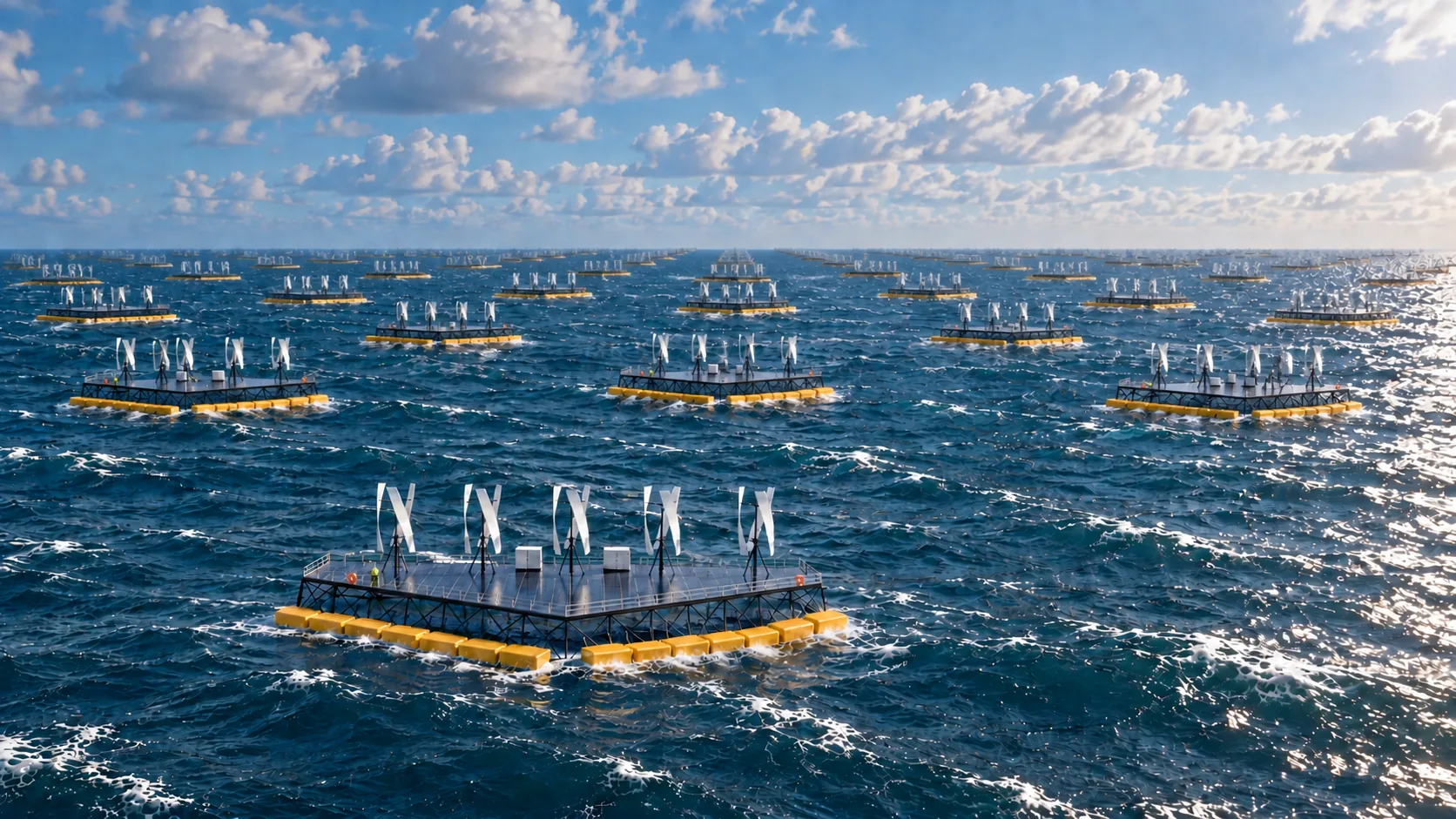
Single units first, arrays later — the same platform, repeated.