
Featured application
Remote islands and coastal communities
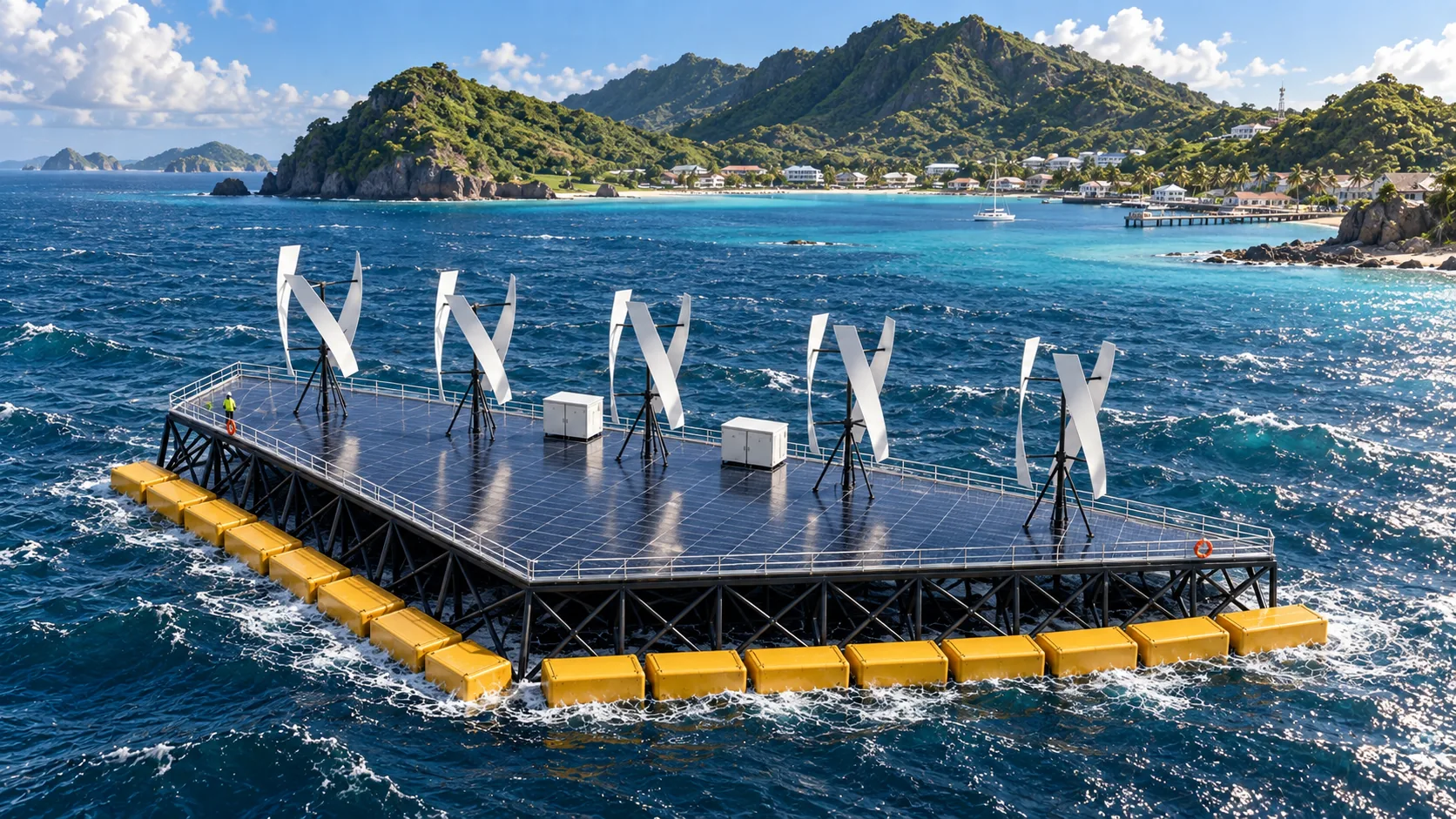
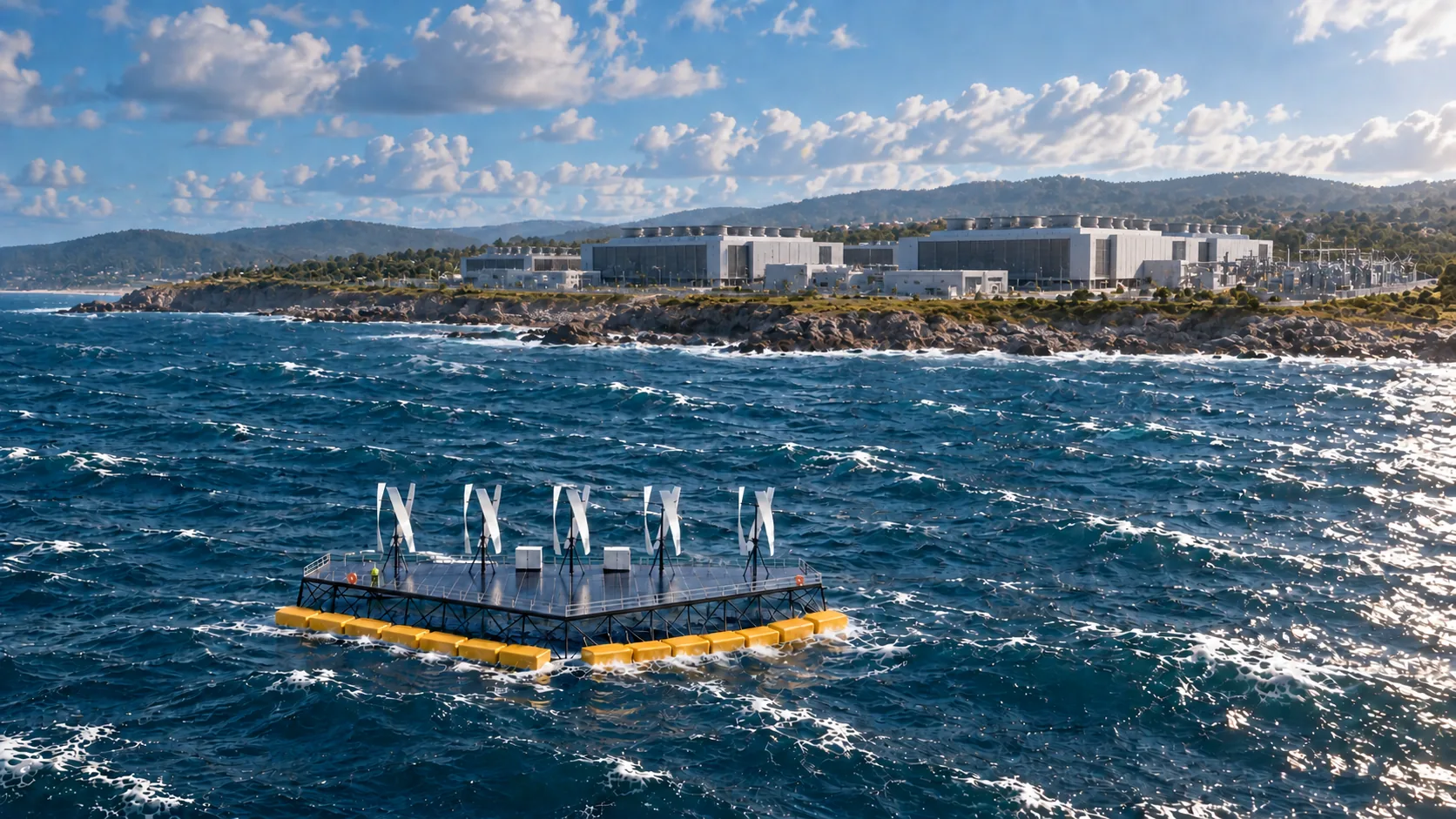
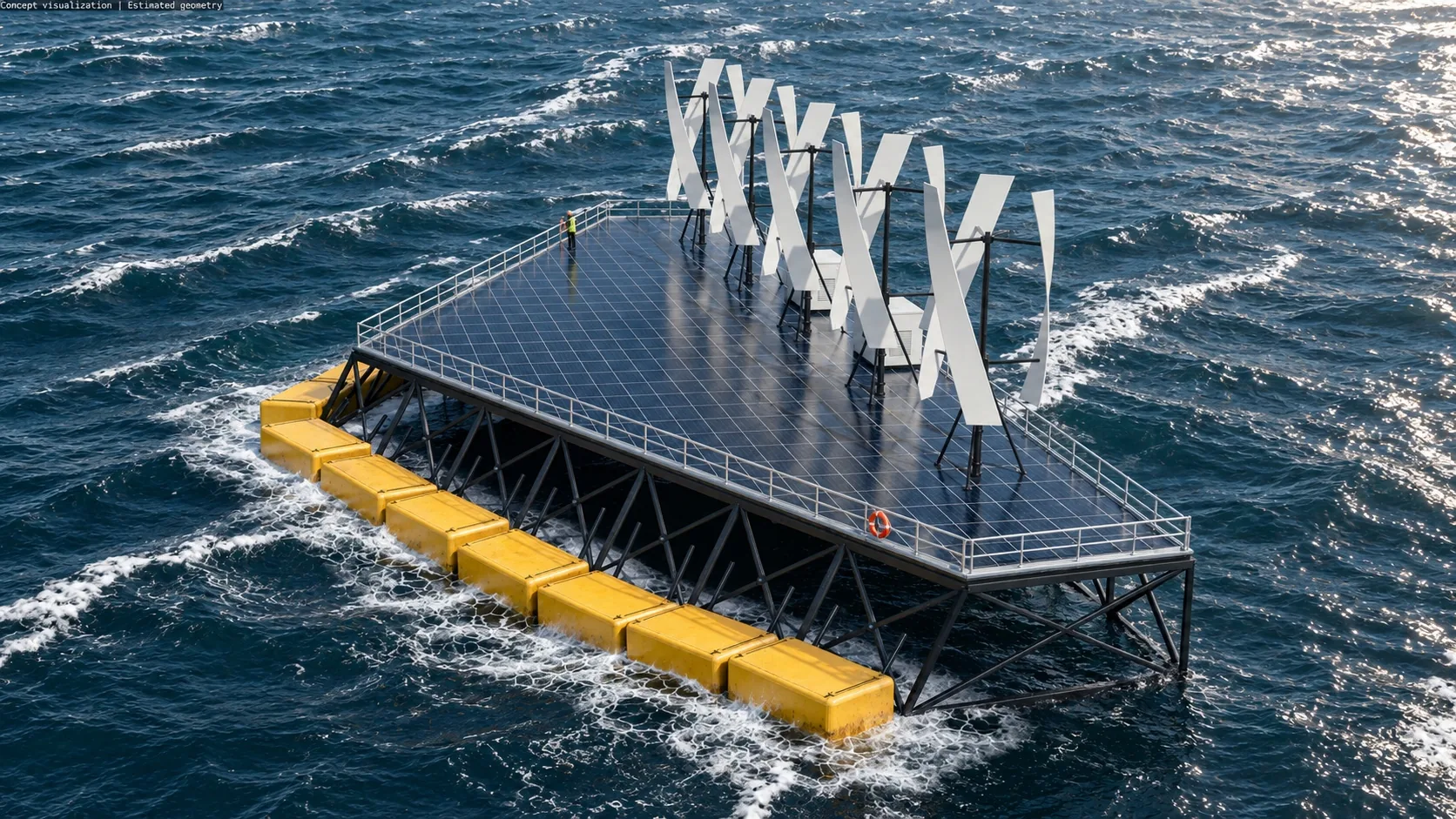
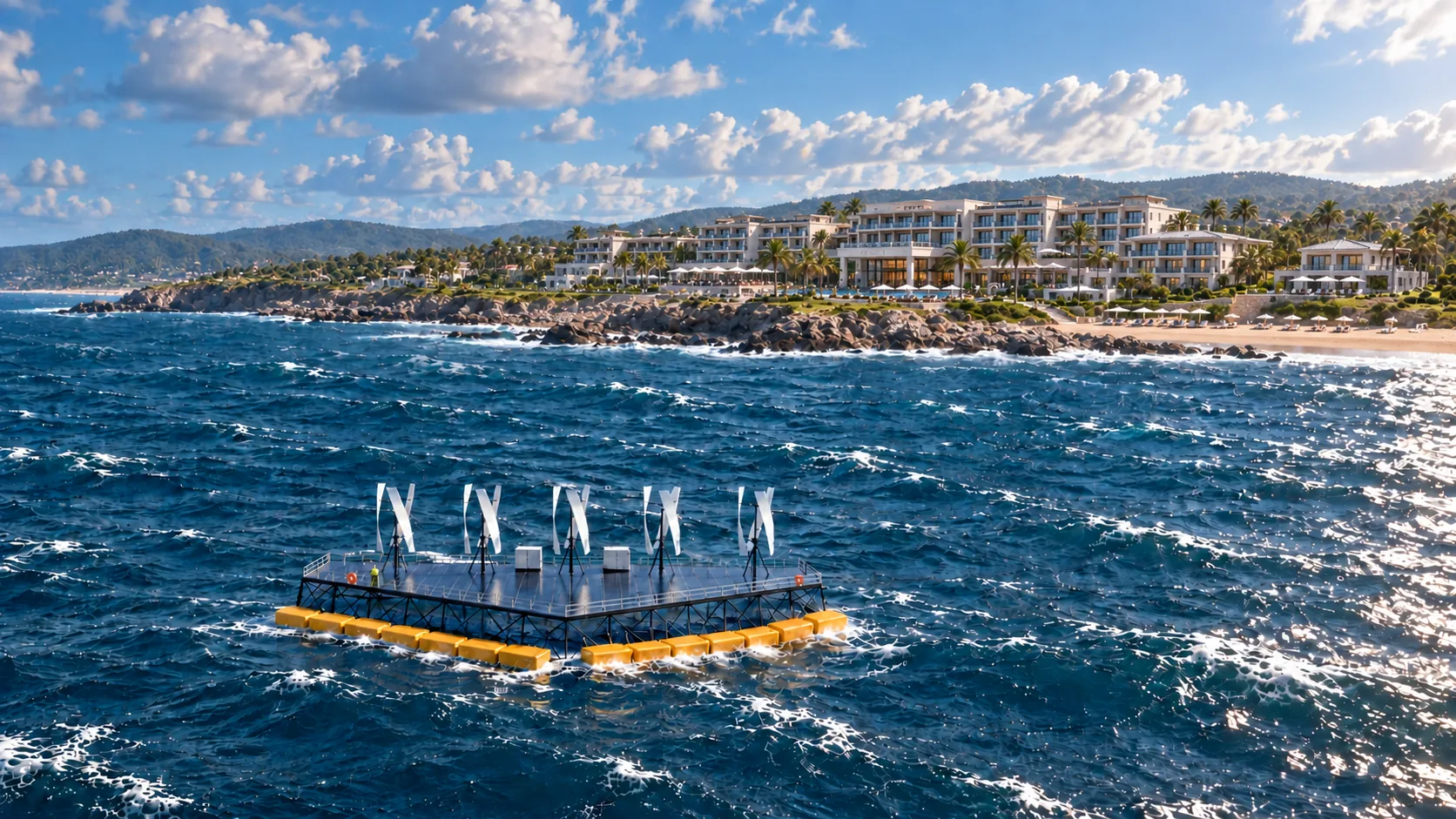
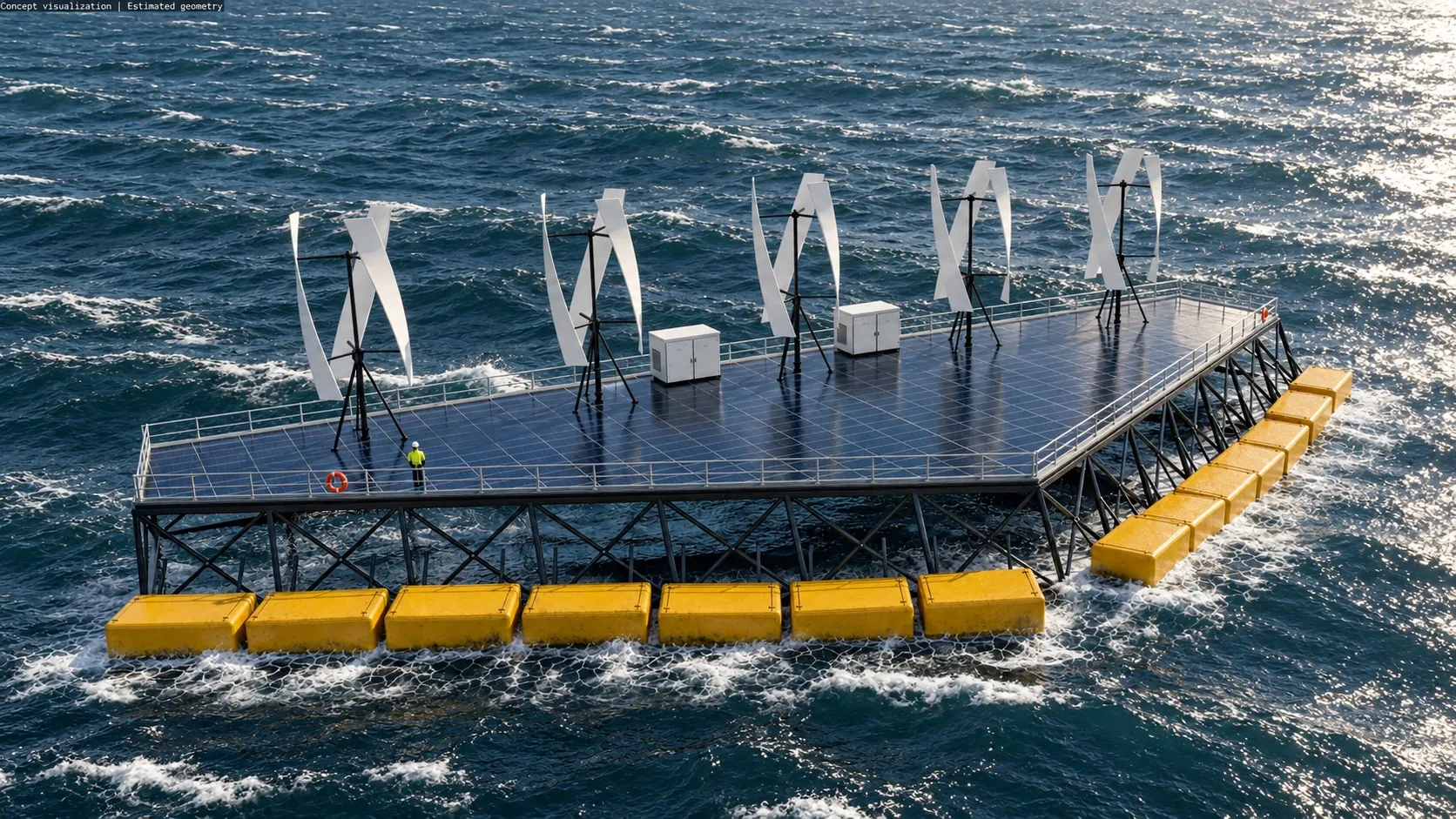
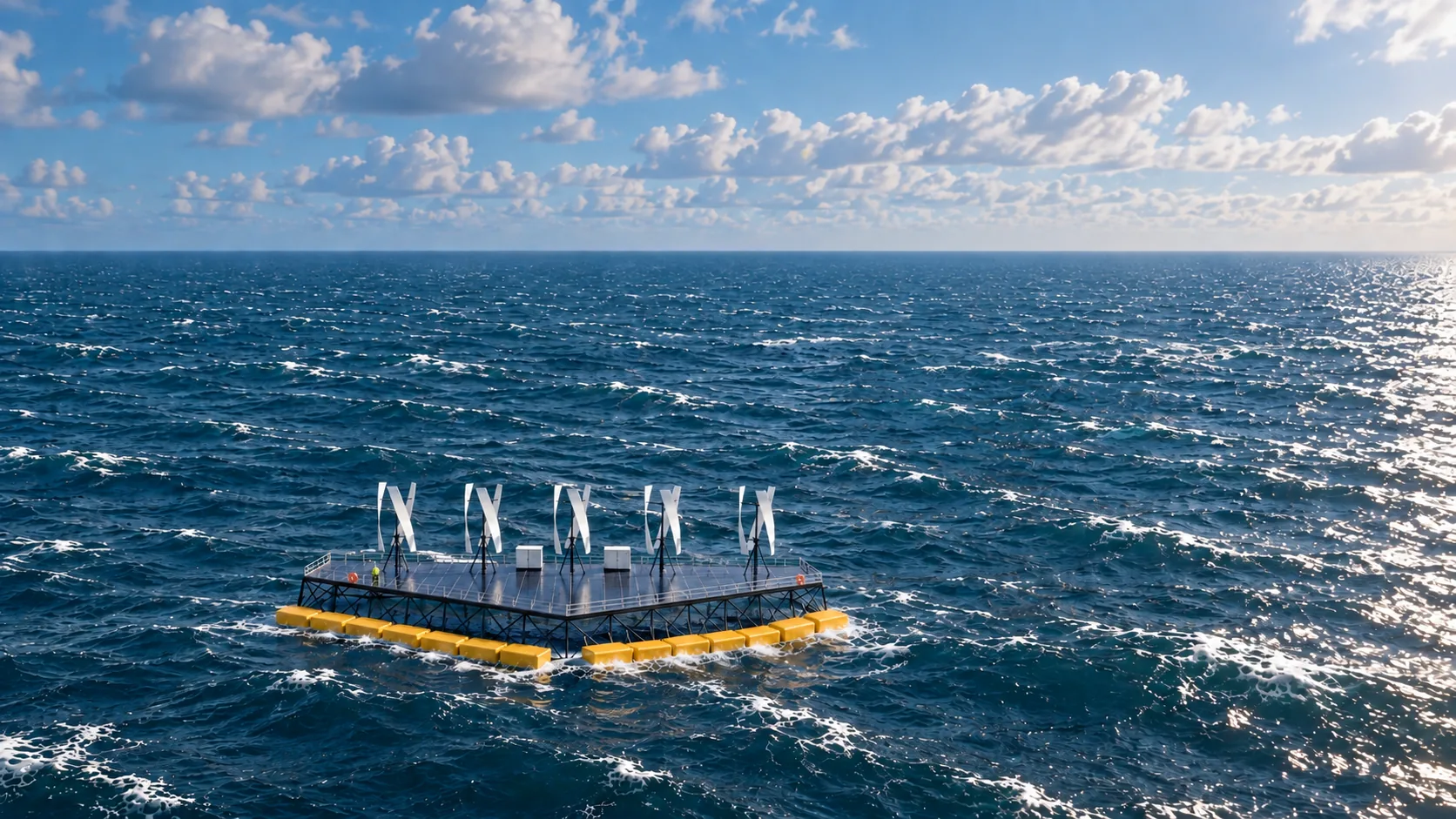
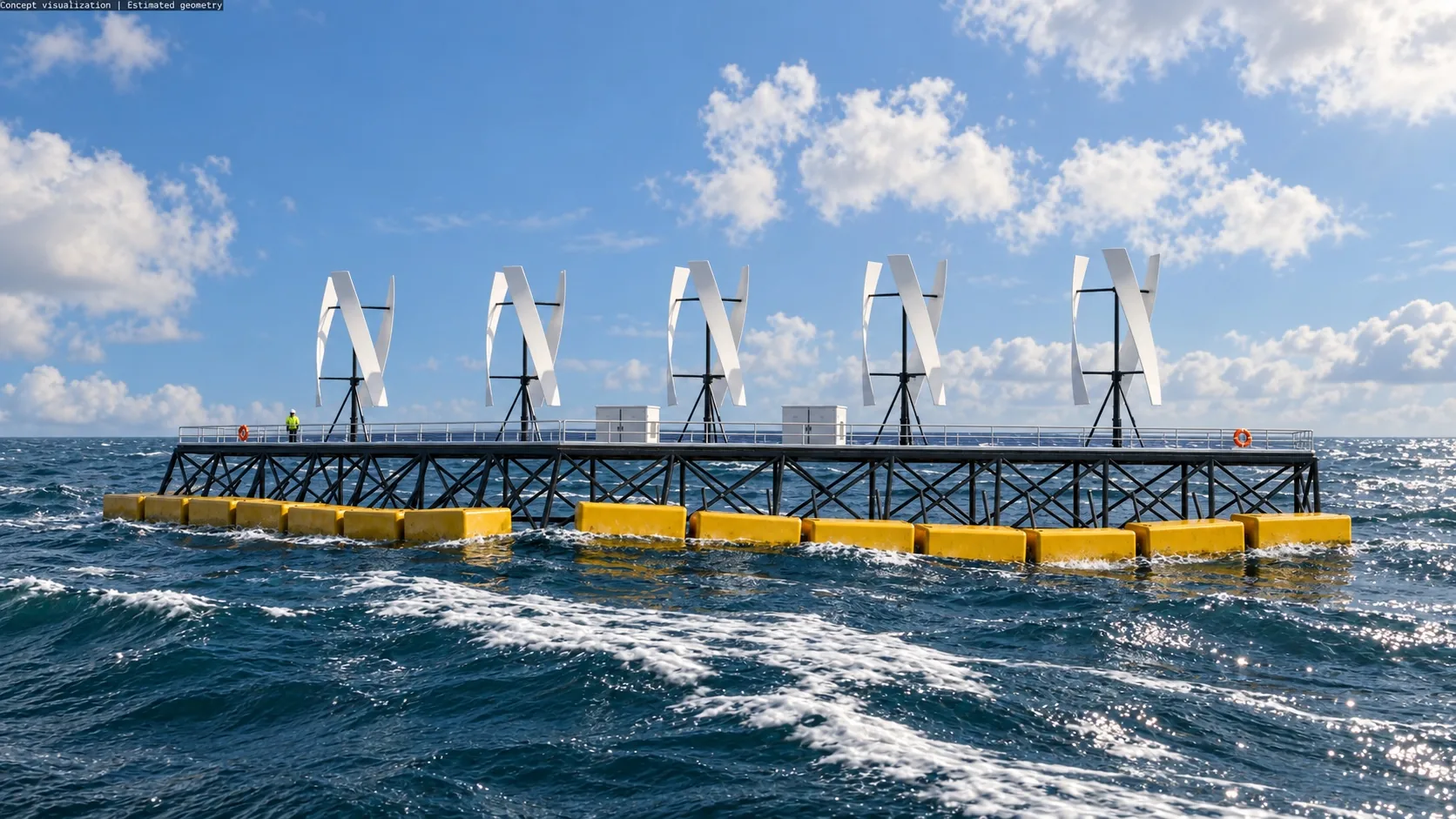
Island electricity is imported, expensive and exposed to weather no one controls. A NoviOcean platform generates wave, wind and solar power offshore — one structure, one mooring, one cable, and nothing built on land.
The customer problem
High diesel costs, energy security, constrained grids and limited land.
Island communities face four linked pressures: high diesel costs, energy security, constrained grids and limited land. Local energy projects need to address these together.
Fuel is paid for twice
An island pays the commodity price of diesel and then pays again to move it — freight, handling, storage and losses. Both parts are set far away and move without warning, so the cost of a kilowatt-hour is decided somewhere the island has no vote.
Reserve held for the days nothing arrives
Weather closes ports and delays tankers. Utilities therefore keep generating capacity and fuel stocks in reserve for supply interruptions — paid for continuously, used occasionally. That reserve is the price of energy security, and it sits on every bill.
A grid with little headroom
Small island networks are usually radial and built around a central power station. Large new connections need reinforcement, and highly variable generation adds a balancing problem to a system that has no neighbour to lean on.
Land that is already spoken for
Ground-mounted solar and onshore wind want the same flat, accessible, coastal land as housing, agriculture and tourism — typically the most valuable land the island has, and the most contested.
Try it
What would an array do for your island?
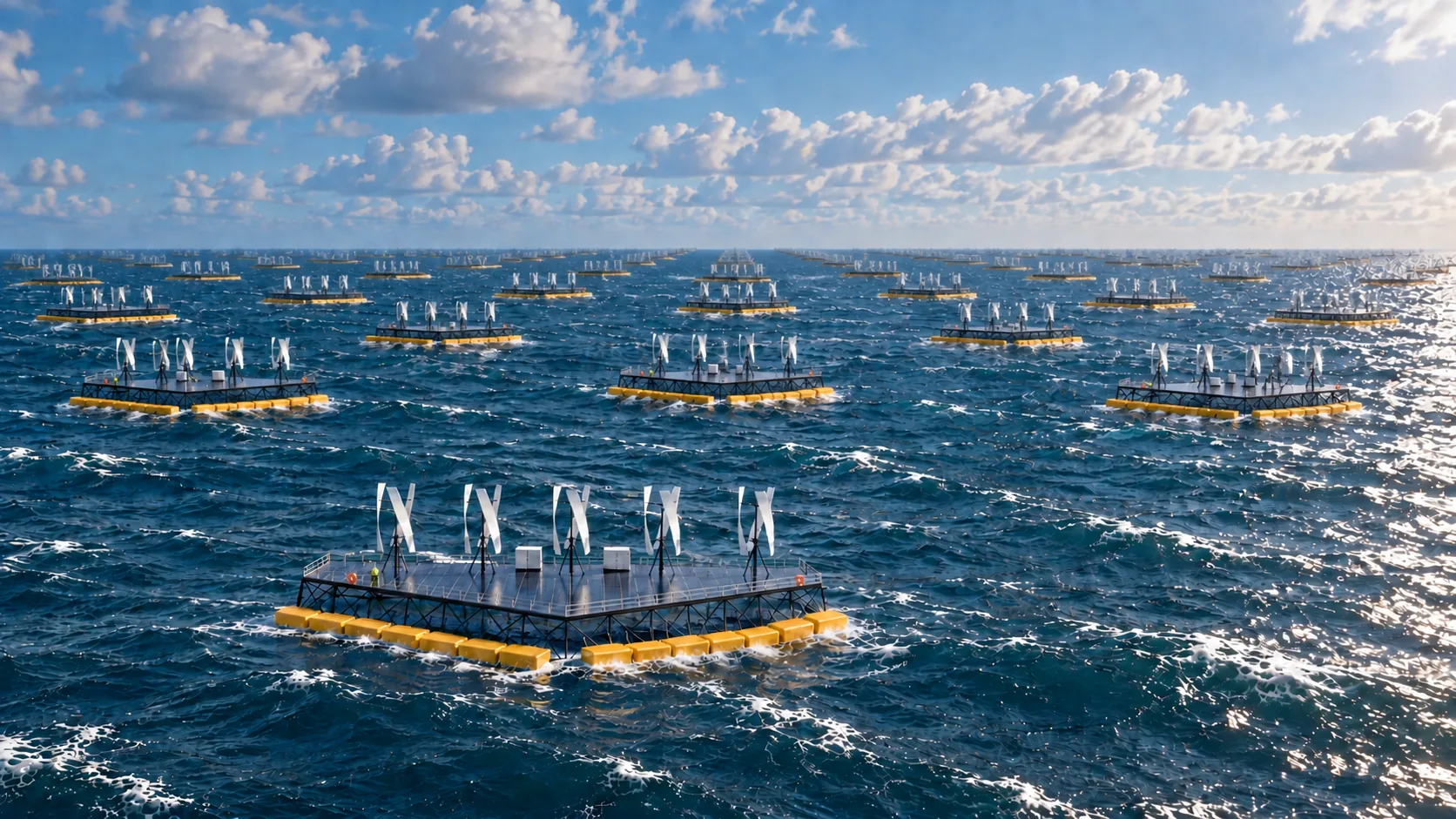
Set the size of the array and your island’s annual demand. The model returns the share of that demand a NoviOcean array could cover in a representative year, and what it displaces. Both figures below start from illustrative defaults — move them to something closer to your own site.
Illustrative scenario based on representative assumptions. Actual performance depends on location, wave climate, wind, solar irradiation, configuration, load profile and local energy costs. Contact NoviOcean for a site-specific assessment.
The assumptions behind these numbers
| Assumption | Value | Source |
|---|---|---|
| Rated power per unit | 850 kW — 300 wave / 350 wind / 200 solar | Deck slide 6; identical on Technology, Medi Wave 850H, Validation and Simulator modeled |
| Annual production per unit | ~2,500 MWh per year | Deck slide 22 — representative modeled production, not guaranteed for your site modeled |
| Diesel displaced | 400 litres per MWh delivered | Derived from ~1,000,000 litres per 2,500 MWh, deck slide 22 modeled |
| Emissions avoided | ~1 tonne CO₂e per MWh delivered | Derived from ~2,500 t per 2,500 MWh, deck slide 22 modeled |
| NoviOcean energy cost | ~70 €/MWh (~7 c€/kWh) | Illustrative scaled-production assumption, within the 5–7 c€/kWh estimate at approximately 50 cumulative units. Not a first full-scale pilot cost projected |
| Capacity factor | not used | V2 publishes no Medi Wave capacity factor. Annual energy comes straight from the published figure above, never from a capacity factor. estimate |
| Reference island tariff | 15–45 c€/kWh, default 30 | Illustrative comparison baseline, not a verified wholesale price or a site-specific quotation partner |
Demand and price above are illustrative defaults, not your site’s figures, and no local wave, wind, solar or demand data has been used. Output is representative modeled production, not a guarantee.
Island economics
Generation cost and electricity price.
Indicative generation costs decline with manufacturing scale and depend on local wave, wind and solar resources, project size and site conditions.
Lower market tier
10–15 c€/kWh
Middle market tier
15–20 c€/kWh
Upper market tier
20–40 c€/kWh
Indicative wholesale market ranges supplied in NoviOcean’s September 2026 website feedback. Actual prices depend on market, period and contract. These are distinct from generation costs and a project’s contracted sales price.
Initial commercial deployment
10–14 c€/kWh
Approximately 50 cumulative units
5–7 c€/kWh
Approximately 200 cumulative units
4–6 c€/kWh
Illustrative generation-cost estimates, dependent on site and resources. These are not guaranteed prices or tariffs, and initial commercial deployment is distinct from a first full-scale pilot.
Generation cost is not the electricity sales price: an investor or independent power producer finances the assets and negotiates a project-specific power purchase agreement. NoviOcean’s commercial objective is to offer electricity at approximately 75% of the relevant displaced energy cost where project economics support it.
What NoviOcean brings
One platform. One mooring. One cable to shore.
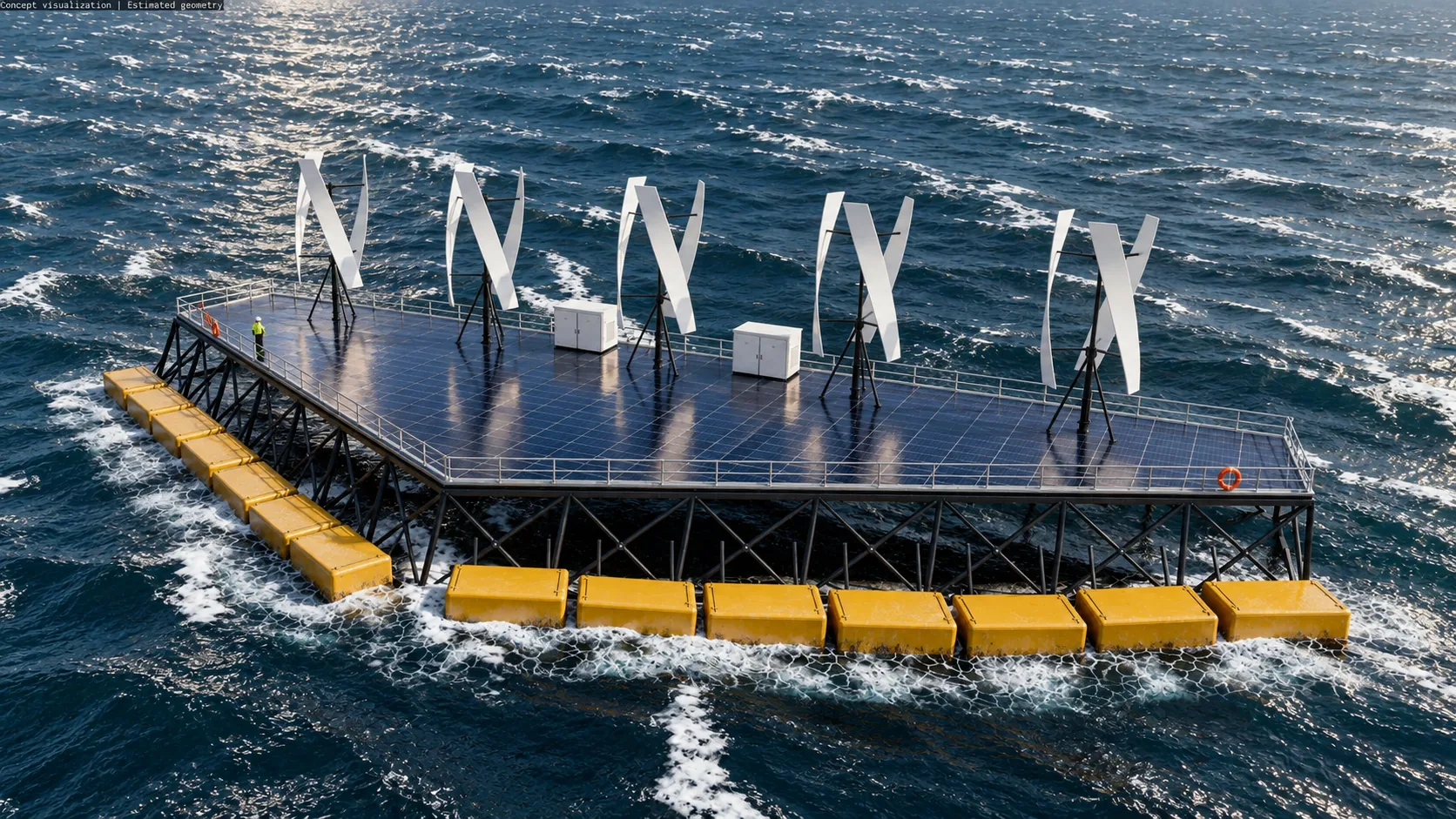
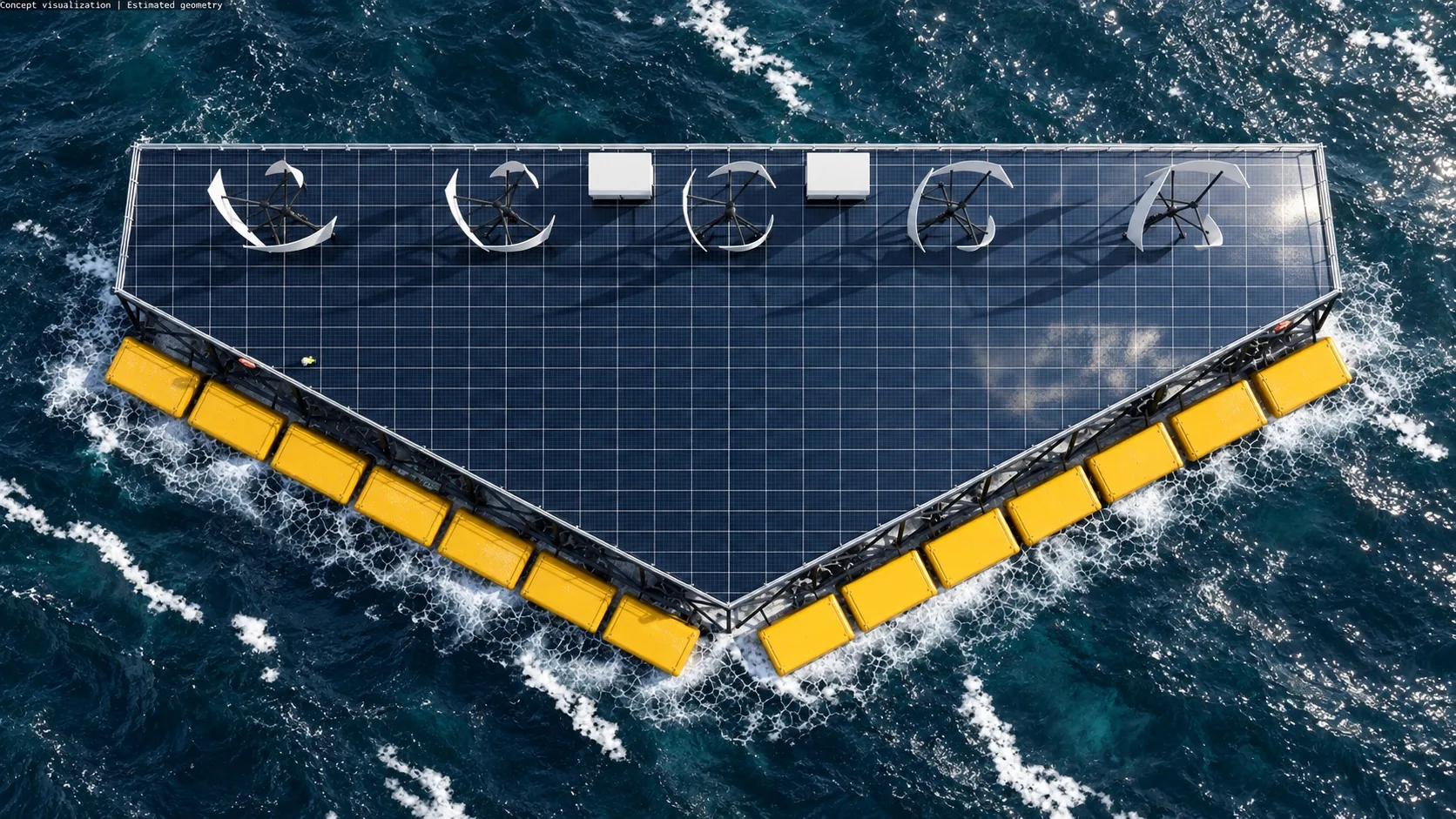
Three generation sources on a single floating structure, sited in the water in front of the community rather than on the land behind it.
One offshore project instead of three
Wave, wind and solar share the same hull, the same anchoring and the same export cable. A unit is rated at 850 kW — 300 kW wave, 350 kW wind and 200 kW solar — so an island permits, installs and maintains one asset rather than commissioning three separate offshore developments. management estimate
Production spread across more hours
The three sources rarely peak together. Wind transfers energy into waves over time and distance, and because water carries so much mass the waves continue after the wind has dropped; solar arrives on a different clock again. Output is therefore spread across more hours of the day and the year than a single-source plant of the same rating. modeled
Less storage and diesel backup — depending on the site
Steadier production narrows the gaps a battery or a generator has to fill. How much backup that actually removes is site- and configuration-dependent: it follows from the local wave climate, wind, irradiation and the shape of the island’s load, and it is settled by a site assessment, not by a brochure.
Nothing built on land
The generation floats. Housing, farmland, tourism and protected ground stay as they are, and the island’s scarcest input is not spent on energy infrastructure.
The yearly effect
What a single unit displaces.
Where a unit replaces diesel generation, these are the three numbers island customers ask about first. They describe one unit in a diesel-displacing application — modelled, not measured at a customer site.
1,000,000 litres
Diesel eliminated, per unit, per year
Fuel that no longer has to be bought, shipped, insured and stored on the island.
modeled~2,500 tonnes
CO₂e avoided annually, per unit
Emissions avoided by the diesel generation the unit replaces.
modeled~2,500 MWh
Electricity produced per unit, per year
Representative modelled production, not a forecast for any particular island.
modeledActual output and savings depend on the site, the load profile and the plant being replaced. The scenario tool shows how the figures move with array size and market, on clearly stated assumptions.
A possible project pathway
From first assessment to island deployment.
Step 01
Assess the project
Assess local wave, wind and solar resources, electricity demand, site conditions and existing generation costs.
Step 02
Deploy and verify
Deploy a first unit sized to the project and verify performance under local conditions.
Step 03
Expand with demand
Expand with additional units as demand and commercial requirements develop.
Ownership and financing are agreed project by project.
Units added one at a time. One connection ashore.
Related applications
Often the same island, a second job.
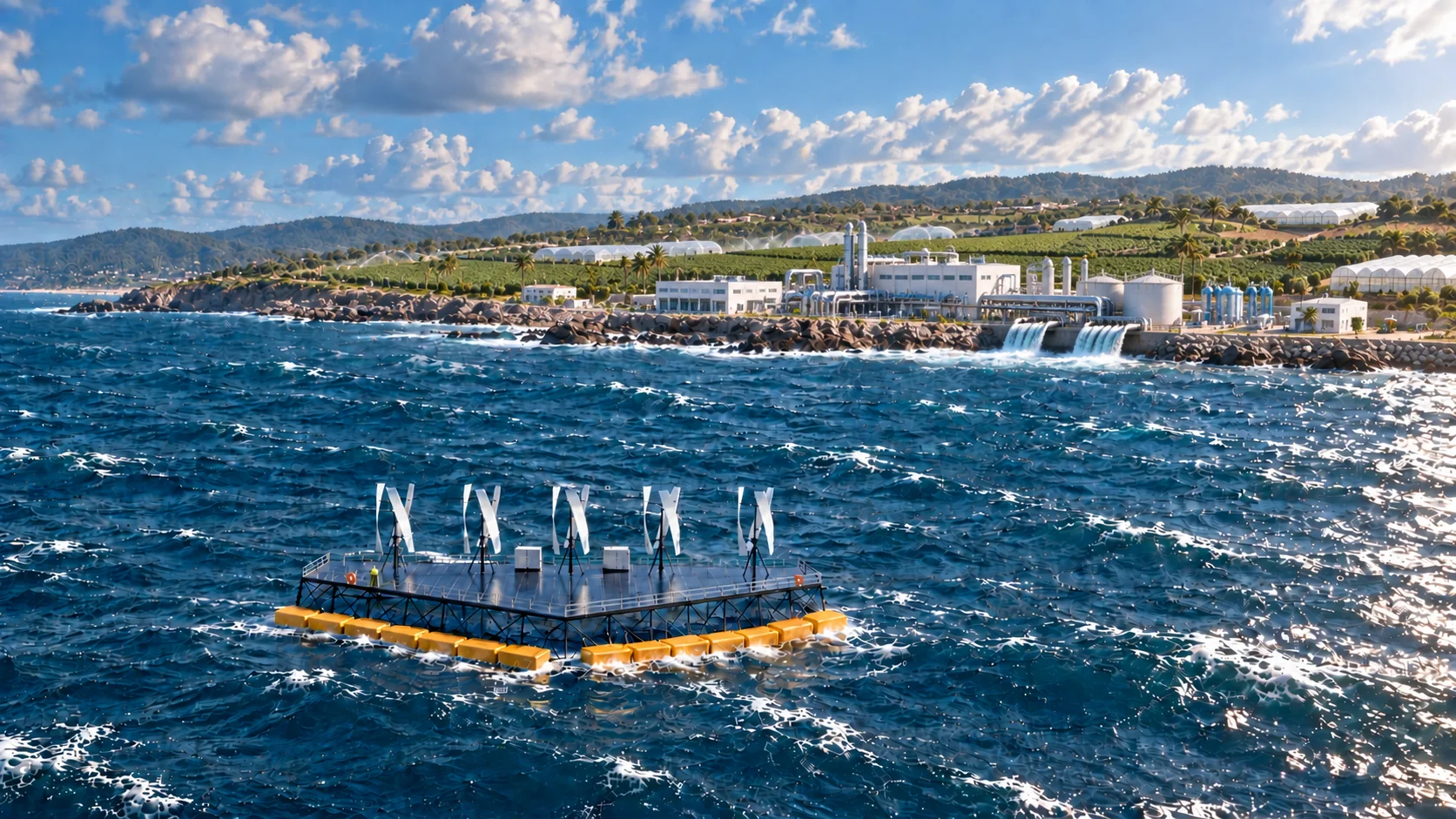
Island projects rarely stay about electricity alone. Freshwater, coastal industry and the wider opportunity set are set out on their own pages.
Tell us about your island.
The annual load, the fuel it burns today and what that fuel costs delivered. With those three numbers we can say honestly whether a NoviOcean unit is a sensible fit for the site — and what it would take to find out properly.